
Montpellier Travel Guide
Montpellier is one of the liveliest cities in southern France: a sunny, walkable university town about 11 km from the Mediterranean, with a car-free medieval center, grand 17th- and 18th-century mansions, a first-rate art museum and sandy beaches a short ride away. It works well as a two- or three-day city break or as a base for exploring the Languedoc coast and countryside.
This guide covers the practical side of a trip: getting there, getting around, when to go, where to base yourself and how much time you need. For a full list of sights, see our guide to things to do in Montpellier.
Montpellier at a Glance
- Where: Hérault department, Occitanie region, on the Mediterranean side of southern France, between Nîmes and Béziers.
- Vibe: young and energetic, with a very large student population, café terraces and a busy cultural calendar.
- Best for: city walks, museums, food and wine, beaches and day trips to the Camargue, Sète and the hills of the Hérault.
- How long: two full days for the city, three or four if you add beaches and day trips.
- Climate: Mediterranean, with hot dry summers, mild sunny winters and occasional heavy autumn rain.
Getting to Montpellier
By Train
Montpellier has two main stations. Montpellier Saint-Roch is in the city center, a few minutes on foot from Place de la Comédie, and handles most TGV and regional TER trains. Montpellier Sud de France is a newer high-speed station on the eastern edge of the city; tram line 1 was extended there in October 2025, so you can reach the center by tram. Always check which station your ticket shows.
Direct TGVs from Paris take roughly three and a half hours. Marseille is under two hours away, Nîmes about half an hour, and there are direct trains toward Barcelona. Our guide to getting from Paris to the South of France compares train, plane and car, and you can read more about France’s TGV high-speed trains.
By Air
Montpellier Méditerranée Airport (MPL) lies about 8 km southeast of the center. A shuttle bus links the terminal with the Place de l’Europe stop on tram line 1, and taxis are available outside arrivals. Check the airport’s website for the current shuttle timetable and fare.
By Car
The A9 motorway passes just south of the city, connecting Montpellier with Nîmes, Avignon and the Rhône valley in one direction and Béziers, Perpignan and Spain in the other. A car is useful for wine country and remote beaches but a burden in the city itself.
Getting Around Montpellier
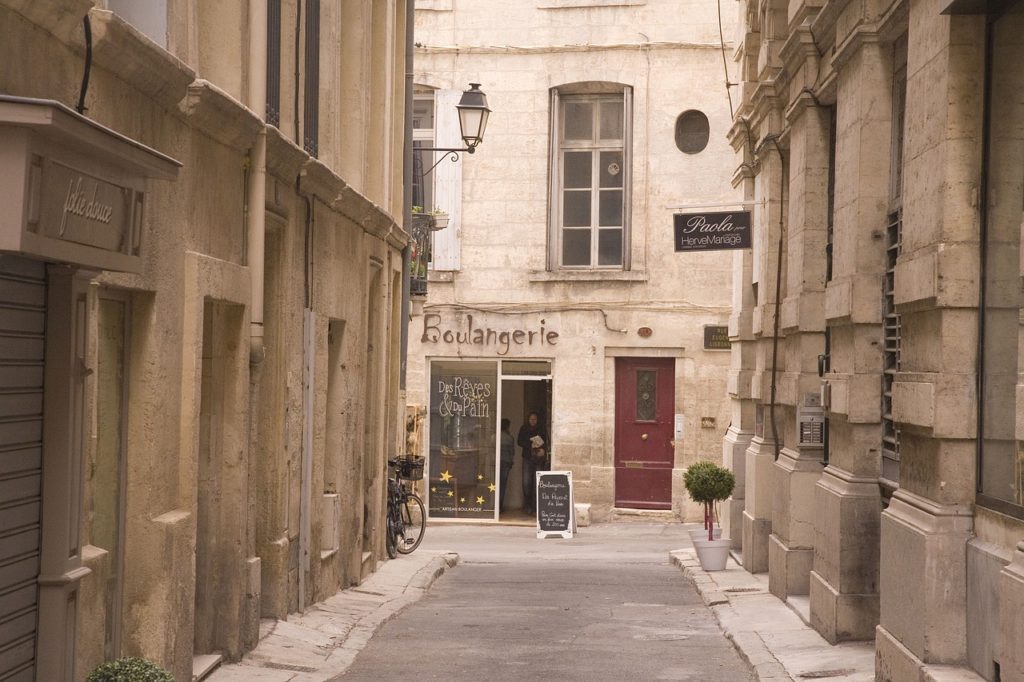
The historic center, known as the Écusson because of its shield shape, is largely pedestrianized, and most sights are within a 20-minute walk of each other. For anything farther, use the TaM network.
Trams and Buses
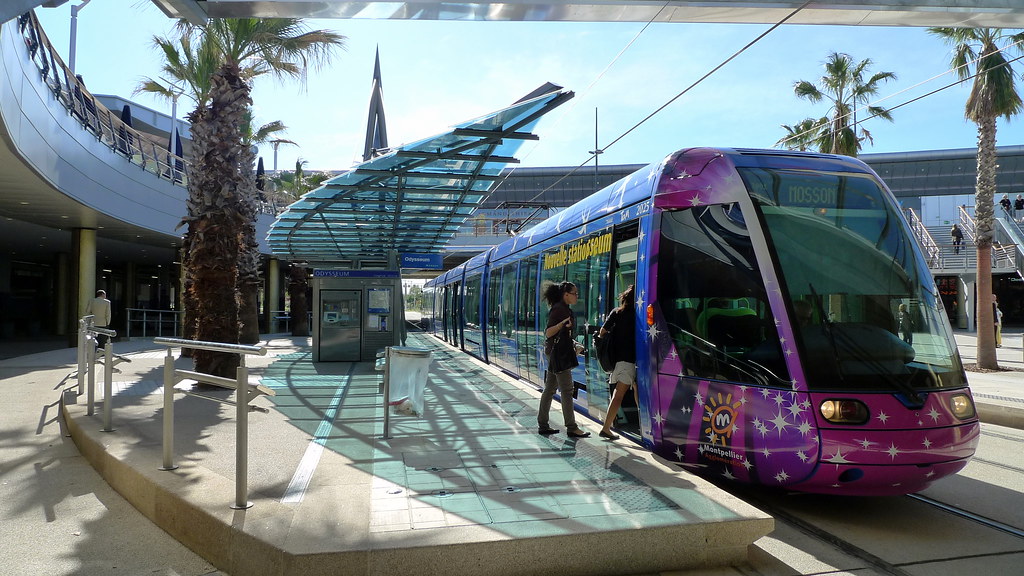
Montpellier has five tram lines after line 5 opened in December 2025, plus a bus network, all run by TaM. The trams are an attraction in their own right, with bold liveries designed by artists including Christian Lacroix. Line 1 serves Saint-Roch station, Place de la Comédie, Antigone and the Odysseum shopping and leisure district; line 3 heads south toward Lattes and Pérols, the jumping-off point for the nearest beaches.
Public transport is free for registered residents of the Montpellier metropolitan area, but visitors need a ticket. Buy one at a station machine or through the TaM app, and validate it each time you board.
Bikes
Montpellier is flat in the center and has a growing network of cycle lanes. The city’s Vélomagg bike-share scheme offers bikes for short trips, and several shops rent bikes for longer rides, such as the cycle path toward Palavas-les-Flots.
Driving and Parking
Driving into the Écusson is restricted, and traffic around the ring roads can be slow. If you arrive by car, leave it in a park-and-ride lot at an outer tram stop or in one of the large central underground car parks, then walk or take the tram. Taxis and ride-hailing apps are available but add up quickly.

Where to Stay in Montpellier
| Area | Why stay here | Best for |
|---|---|---|
| Écusson (old town) | Medieval lanes, mansions, cafés and the main sights on your doorstep | First-time visitors, couples |
| Comédie and Saint-Roch | Next to the station and the main square, with easy tram links | Short stays, travelers arriving by train |
| Antigone | Modern neoclassical district near the Lez river, quieter at night | Families, longer stays |
| Arceaux and Beaux-Arts | Residential, local markets, a short walk from the center | Travelers who want a neighborhood feel |
| Odysseum and Port Marianne | Newer areas with chain hotels and parking, on tram line 1 | Drivers, budget hotel deals |
The center can be noisy on weekend nights, especially around the student bar squares, so ask for a courtyard-facing room if you are a light sleeper. For a frank look at which areas to be careful in, see Is Montpellier Safe?
Top Sights in Brief
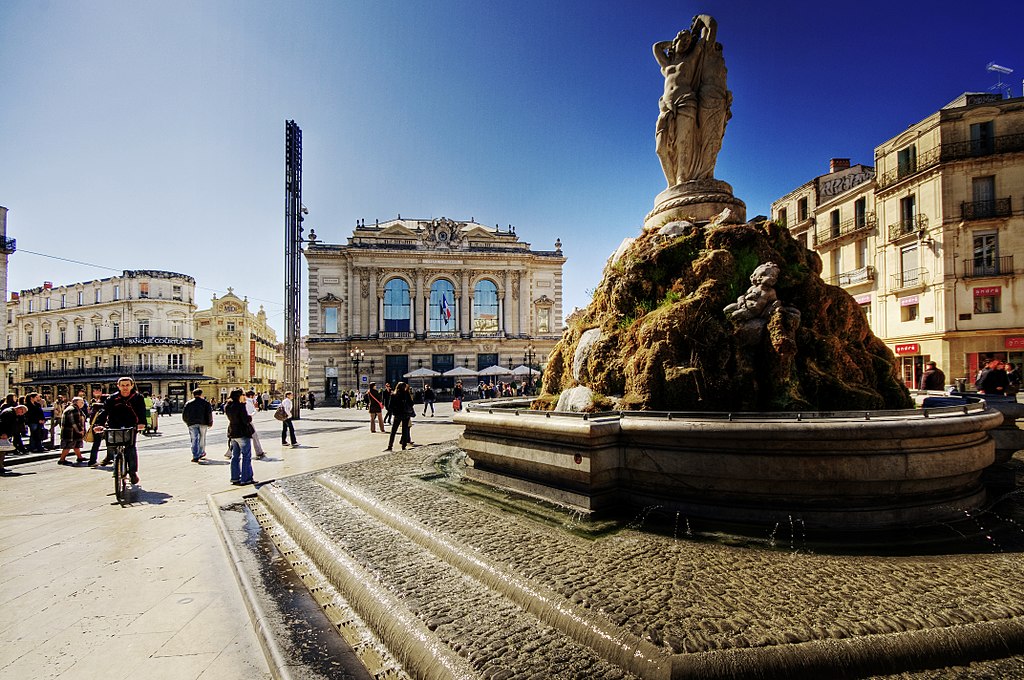
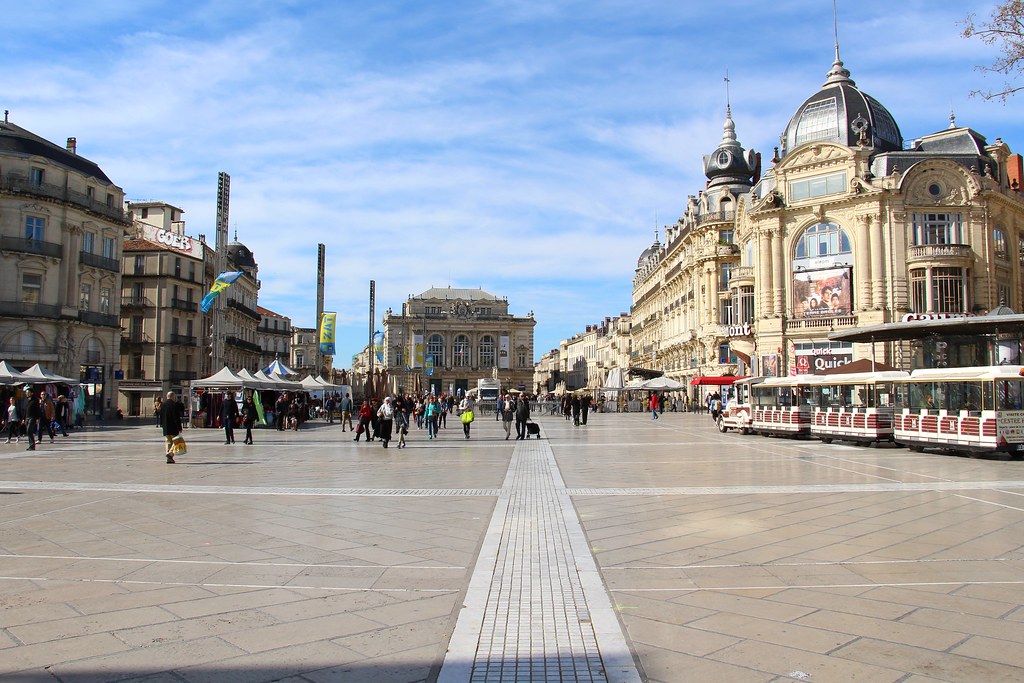
- Place de la Comédie: the huge pedestrian main square with the 19th-century opera house and the Three Graces fountain.
- Promenade du Peyrou: an 18th-century terrace with the Louis XIV statue, a water tower and views toward the Cévennes on clear days.
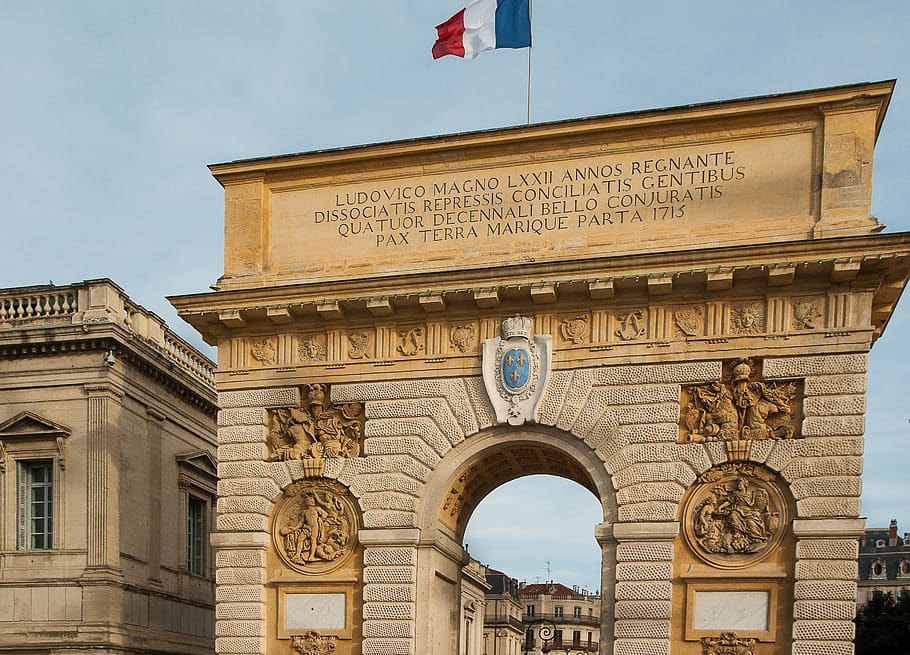
- Arc de Triomphe (Porte du Peyrou): a triumphal arch completed in 1693 in honor of Louis XIV, inspired by the Porte Saint-Denis in Paris.
- Saint-Clément Aqueduct: an 18th-century aqueduct whose arches stride across the Arceaux district.
- Musée Fabre: one of France’s leading fine-art museums outside Paris, with a room devoted to Pierre Soulages.
- Saint-Pierre Cathedral: a fortress-like Gothic church with a striking porch supported by two massive pillars.
- Pavillon Populaire: a free gallery on the Esplanade with high-quality photography exhibitions.
- Antigone: Ricardo Bofill’s monumental neoclassical-style district, built from the late 1970s onward.
- Lunaret Zoo: a large wooded zoological park in the north of the city with free entry to the main park.

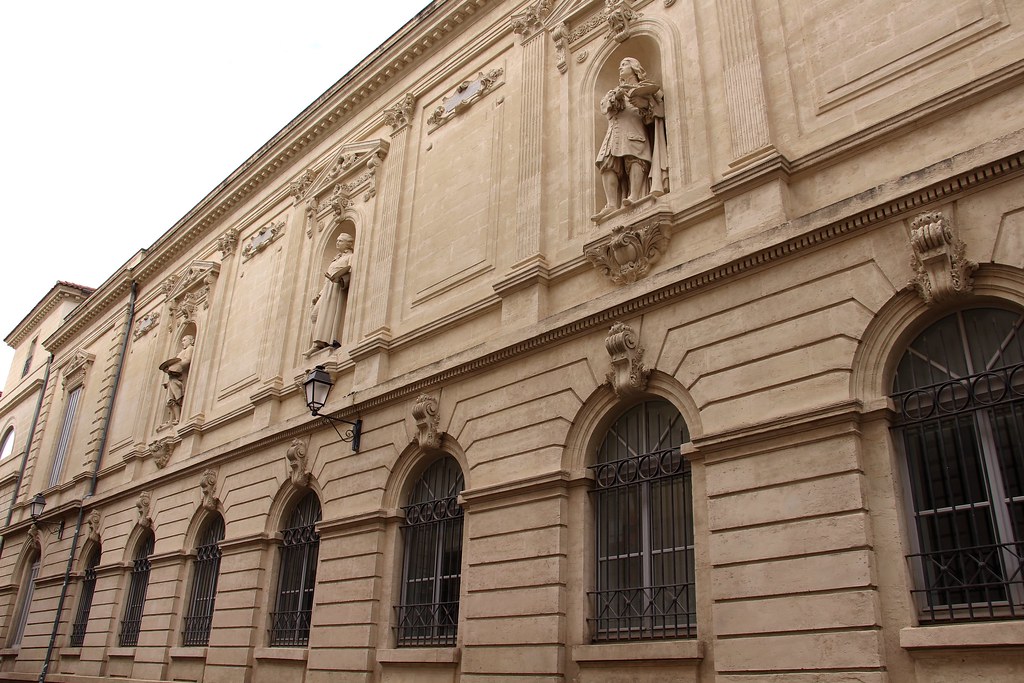
The things to do in Montpellier guide has a suggested route and more detail on each of these, plus day trips to Saint-Guilhem-le-Désert and Pic Saint-Loup.
When to Visit Montpellier
| Season | What to expect |
|---|---|
| Spring (April to June) | Warm, sunny and green; good for walking and day trips. The FISE action sports festival usually takes place in spring and draws big crowds. |
| Summer (July and August) | Hot, busy at the beaches, many students away. Expect outdoor festivals such as Montpellier Danse and the Friday-evening Estivales wine and music nights on the Esplanade. |
| Autumn (September to November) | Warm sea in September, grape harvest in the surrounding vineyards, fewer crowds. Heavy Mediterranean rainstorms can hit in autumn, so watch the forecast. |
| Winter (December to March) | Mild and often sunny, quiet and good value. Some beach businesses close, but museums and restaurants stay open. |
Late spring and September offer the best balance of weather, sea temperature and crowds. Festival dates change from year to year, so check the Montpellier tourist office calendar before you plan around an event.
Food and Drink
Eating in Montpellier means Mediterranean seafood, oysters and mussels from the nearby Thau lagoon, local wines from the Languedoc (look for Pic Saint-Loup reds and crisp Picpoul de Pinet whites) and sweet Grisettes de Montpellier, small honey and licorice candies. The covered Halles Castellane in the old town and the open-air markets are good places to assemble a picnic.
Day Trips from Montpellier
- Beaches: Carnon, Palavas-les-Flots, La Grande-Motte and l’Espiguette. See our guide to the best beaches near Montpellier.
- Sète: a canal-laced fishing port on the Thau lagoon, around 20 minutes by train.
- Saint-Guilhem-le-Désert: a medieval village and abbey in a gorge of the Hérault river.
- Pic Saint-Loup: a limestone peak with hiking trails and wine estates north of the city.
- Nîmes and Aigues-Mortes: Roman monuments and a walled medieval town on the edge of the Camargue.
Summary
Montpellier is easy to reach by fast train, easy to explore on foot and by tram, and full of things to see and eat. Base yourself in or near the Écusson, give the city two or three days, and add the beaches or a vineyard trip if you have time. Still deciding? Our article on whether Montpellier is worth visiting weighs up the pros and cons.
