
Where Can You Go Skiing in France?
You can ski in six mountain ranges in France, but most visitors head to the French Alps, which have the country’s biggest, highest and best-known resorts, from Chamonix and Val d’Isère to Méribel and Alpe d’Huez. The Pyrenees along the Spanish border offer smaller, cheaper and more relaxed resorts, while the Massif Central, Jura and Vosges have family-friendly skiing at lower altitudes. Corsica even has a few small ski stations.

This guide explains where each ski region is, what kind of skier it suits, and highlights nine resorts worth knowing. For our shortlist of top picks by type of trip, see the best places to ski in France.
France’s ski regions at a glance
| Region | Best for | Example resorts | Nearest gateways |
|---|---|---|---|
| Northern Alps (Savoie, Haute-Savoie) | Huge linked areas, high altitude, every level | Chamonix, Val d’Isère, Tignes, Méribel, Courchevel, La Plagne, Avoriaz | Geneva, Lyon, Chambéry |
| Southern Alps (Isère, Hautes-Alpes, Alpes-Maritimes) | Sunshine, good value, freeride | Alpe d’Huez, Les Deux Alpes, Serre Chevalier, La Grave, Isola 2000 | Grenoble, Lyon, Nice |
| Pyrenees | Lower prices, families, spa towns | Saint-Lary-Soulan, Grand Tourmalet, Font-Romeu | Toulouse, Pau, Lourdes |
| Massif Central | Short trips, beginners, cross-country | Super-Besse, Le Lioran | Clermont-Ferrand |
| Jura | Cross-country skiing, quiet family resorts | Les Rousses, Métabief | Geneva |
| Vosges | Weekend skiing from eastern France | La Bresse, Gérardmer | Strasbourg, Nancy |
Snow is most reliable in the high resorts of the northern Alps, where many areas reach well above 2,500 m. The season generally runs from mid-December to mid or late April, with the highest resorts staying open a little longer. Lower-altitude resorts have shorter, less predictable seasons, so check snow conditions before booking.
Resorts worth knowing in the French Alps
Chamonix
Chamonix is a real mountain town at the foot of Mont Blanc rather than a purpose-built resort, and it is famous for steep terrain and big off-piste. Its skiing is split into separate areas along the valley, linked by buses and trains: Brévent and Flégère above town, Grands Montets above Argentière for advanced skiers, and the Balme area above Le Tour, which suits beginners and intermediates.
The most famous run is the Vallée Blanche, a roughly 20 km off-piste glacier descent that starts from the Aiguille du Midi cable car. The start involves walking down an exposed ridge, and the route crosses crevassed glaciers, so it should only be skied with a qualified mountain guide. Read more in what Chamonix is known for.
Val d’Isère
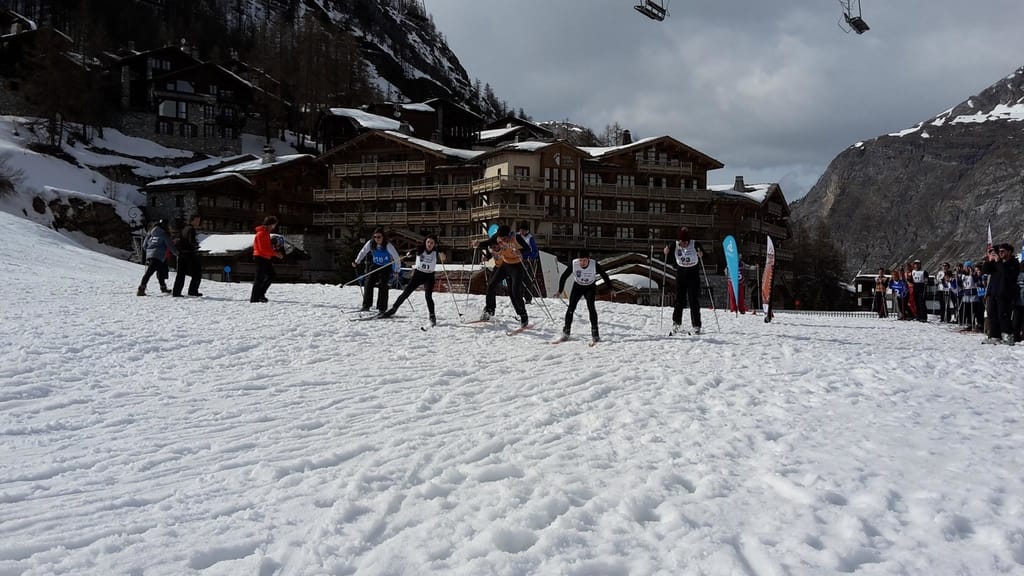
Val d’Isère shares a huge high-altitude ski area with Tignes, formerly marketed as Espace Killy. It is known for snow-sure skiing, lift-accessed off-piste and a lively après-ski scene. The Face de Bellevarde, the men’s downhill run of the 1992 Albertville Winter Olympics, is a challenge for strong skiers, while the Pissaillas Glacier above Le Fornet is the highest and often quietest part of the area. Val d’Isère is not cheap; see is Val d’Isère expensive for a budget breakdown.

Avoriaz
Avoriaz is a car-free, ski-in/ski-out resort built in the 1960s on a cliff top in Haute-Savoie. Its angular, wood-clad buildings were designed to blend into the rock. It sits at the heart of the Portes du Soleil, a vast ski area shared between France and Switzerland, and is known for its snow parks. Strong skiers can cross into Switzerland and tackle the famous Swiss Wall (Chavanette), a steep, often mogul-covered black run.
Alpe d’Huez
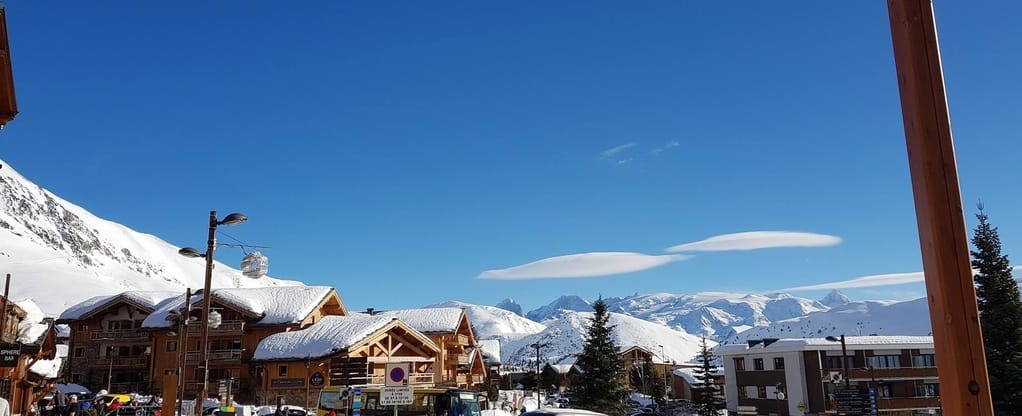
Alpe d’Huez is known as the “island in the sun” for its sunny, south-facing slopes. Its big ski area links the main resort with the villages of Oz, Vaujany, Villard-Reculas and Auris. From the Pic Blanc at 3,330 m, the Sarenne black run descends about 16 km, making it one of the longest black runs in the world. The wide beginner zones near the resort make it a good choice for mixed-ability groups. Check whether Alpe d’Huez is expensive before you book.
La Plagne
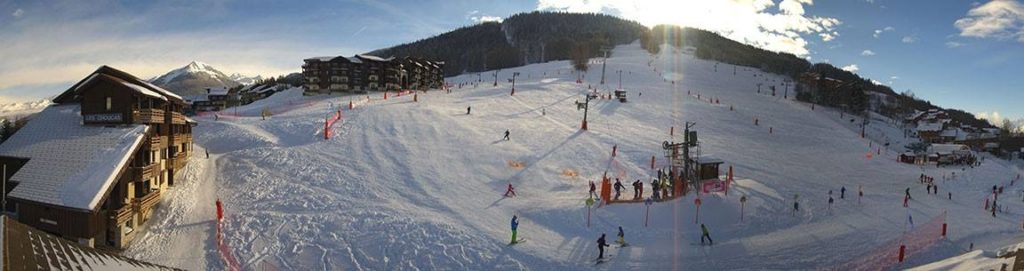
La Plagne is a cluster of resort villages, some purpose-built at altitude and some traditional villages lower down, which makes it a favorite with families who want ski-in/ski-out apartments. It is linked to Les Arcs by the double-decker Vanoise Express cable car, creating the Paradiski area. Most of the terrain is intermediate cruising on open bowls, with tree runs lower down and off-piste around the Bellecôte glacier.

Méribel
Méribel sits in the middle of Les 3 Vallées, often described as the world’s largest linked ski area, with easy access to Courchevel on one side and Les Menuires and Val Thorens on the other. It has a traditional chalet style, a large British community and lively après-ski, including La Folie Douce on the slopes. Méribel co-hosted the 2023 Alpine World Ski Championships with Courchevel. See is Méribel expensive for costs.

La Clusaz
La Clusaz is a genuine Savoyard village in the Aravis mountains, about an hour from Geneva and close to Annecy. Its ski area is well suited to intermediates, while the high Balme sector often has the best snow and attracts freeriders. A ski bus connects it with nearby Le Grand-Bornand. Après-ski is relaxed rather than wild, and the village is a good base for food lovers, since this is the home of Reblochon cheese.
Skiing in the Pyrenees
Saint-Lary-Soulan
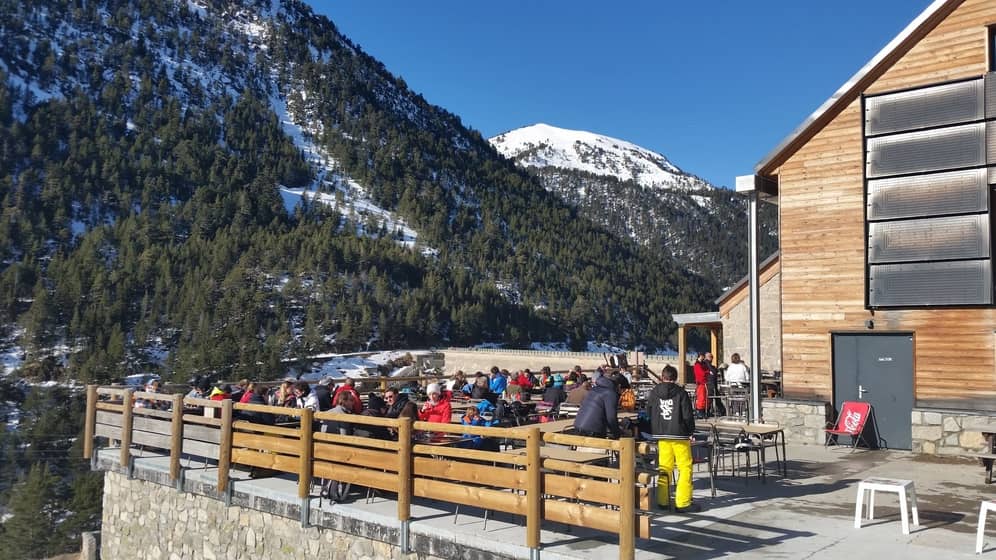
For a cheaper, quieter ski holiday, the French Pyrenees are a great alternative to the Alps. Saint-Lary-Soulan is one of the largest resorts in the range, with a traditional village in the valley linked by cable car to the slopes. The skiing is spread across Pla d’Adet, Espiaube and the higher Saint-Lary 2400 area, which has a snow park. After skiing, you can relax in the village’s thermal spa.
Freeride country: La Grave

La Grave
La Grave, in the Hautes-Alpes beneath La Meije, is not a conventional resort. A cable car climbs to the glaciers, and apart from a few runs on the glacier at the top, there are no groomed, marked or patrolled pistes: the entire mountain is high-alpine off-piste terrain. The best-known routes, the Vallons de la Meije and the Vallons de Chancel, are serious descents with glaciers, cliffs and avalanche risk, so only expert skiers and riders should go, ideally with a local guide. The cable car has had interruptions in recent seasons, so check its operating status before you plan a trip.
How to get to French ski resorts
- By plane: Geneva is the main gateway for the northern Alps, Lyon and Chambéry also serve Savoie, Grenoble for the southern Alps, Nice for Isola 2000 and Toulouse or Pau for the Pyrenees.
- By train: in winter, TGV and other trains run to valley stations such as Moûtiers and Bourg-Saint-Maurice (for Les 3 Vallées, Paradiski and Tignes-Val d’Isère), Sallanches and Saint-Gervais (for Chamonix and Megève) and Cluses (for the Grand Massif). Buses or transfers cover the final climb.
- By car: carry winter equipment. In many mountain areas of France, winter tires or chains are mandatory from November to March.
Tips for choosing where to ski
- Avoid French school holidays if you can, especially in February, when resorts are busiest and prices highest.
- Go high early and late in the season, when lower resorts may lack snow.
- Match the resort to your group: purpose-built resorts offer ski-in/ski-out convenience, while traditional villages have more charm and better restaurants.
- Consider the Pyrenees or smaller Alpine resorts for lower lift-pass and accommodation costs.
- Respect off-piste risks: carry avalanche safety gear, check the avalanche bulletin and hire a guide for unfamiliar terrain.
Planning a romantic ski trip? See our picks for French Alps honeymoon hotels.
Summary
France offers skiing in the Alps, Pyrenees, Massif Central, Jura and Vosges, but the Alps are the main draw, with giant linked areas such as Les 3 Vallées, Paradiski, Tignes-Val d’Isère and the Portes du Soleil. Choose Chamonix or La Grave for steep and off-piste skiing, La Plagne, Méribel or Alpe d’Huez for varied cruising, La Clusaz for village charm, and the Pyrenees for a cheaper, quieter trip.
