
Best Mountain Hikes in France
The best mountain hikes in France include the Tour du Mont Blanc in the Alps, the Cirque de Gavarnie and Pic du Midi in the Pyrenees, the GR20 across Corsica, Montagne Sainte-Victoire in Provence and the volcanic summit of Puy de Sancy in the Massif Central. France has seven major mountain ranges, so whether you want a multi-day trek or a half-day walk to a viewpoint, there is a great hike within reach of almost every region.
Here are ten of the best, from easy family outings to serious challenges, with practical tips on when to go and how to stay safe.
At a glance
| Hike | Range | Difficulty | Best season |
|---|---|---|---|
| Tour du Mont Blanc | Alps | Challenging, multi-day | Mid-June to mid-September |
| Lac Blanc and Grand Balcon (Aiguille Verte views) | Alps | Moderate | July to September |
| Mourre Nègre | Luberon | Easy to moderate | Spring and autumn |
| Montagne Sainte-Victoire | Provence | Moderate | Spring and autumn |
| Cirque de Gavarnie | Pyrenees | Easy | June to October |
| Pic du Midi de Bigorre | Pyrenees | Challenging | July to September |
| Grand Colombier | Jura | Moderate | May to October |
| Hohneck | Vosges | Easy to moderate | May to October |
| Puy de Sancy | Massif Central | Moderate | June to October |
| GR20 and Monte Cinto | Corsica | Very challenging | Mid-June to September |
1. Tour du Mont Blanc, Alps

At about 4,805 m, Mont Blanc is the highest mountain in the Alps and in Western Europe. Climbing it is a serious mountaineering expedition that requires experience, equipment and usually a guide, and accidents happen every year among unprepared climbers. Read more in is Mont Blanc dangerous?
For hikers, the classic way to experience the massif is the Tour du Mont Blanc (TMB), a loop of roughly 170 km around the mountain through France, Italy and Switzerland. Most people take 10 to 12 days, walking six to seven hours a day with around 10,000 m of total ascent, and sleeping in mountain huts, gîtes and hotels along the way. It is a walk, not a climb, but it is demanding and the weather can change fast. Huts fill up months in advance in July and August, so book early. Many hikers also do shorter sections from Chamonix or Les Contamines.
2. Lac Blanc and the Grand Balcon, facing the Aiguille Verte
The Aiguille Verte (4,122 m) is one of the most impressive peaks of the Mont Blanc massif, but its summit is strictly for experienced alpinists. The good news is that you can enjoy some of the best views of it from classic hikes on the opposite side of the Chamonix valley.
The walk to Lac Blanc in the Aiguilles Rouges, usually starting from the Flégère lift, rewards you with reflections of the Aiguille Verte, the Drus and Mont Blanc in a high mountain lake. The Grand Balcon Nord between the Plan de l’Aiguille and Montenvers, above the Mer de Glace glacier, is another spectacular route. Both are popular from July to September. Chamonix is the natural base; see our guide to things to do in Chamonix in summer.
3. Mourre Nègre, Luberon
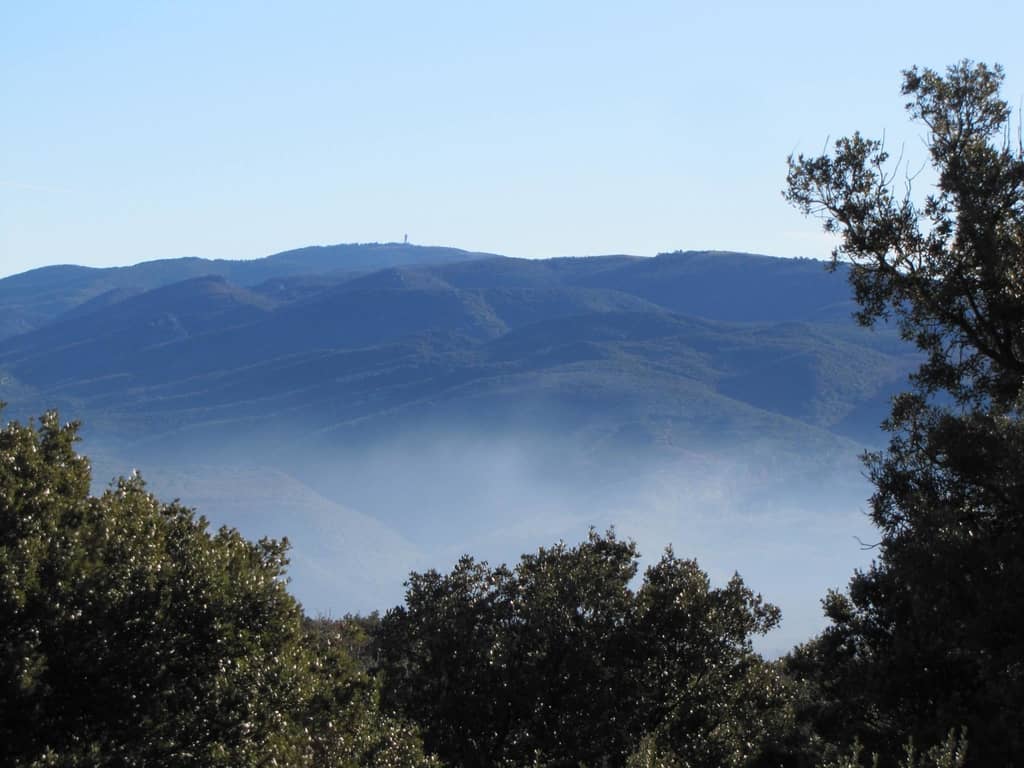
At 1,125 m, Mourre Nègre is the highest point of the Luberon range in Provence. The Luberon Regional Natural Park is also a UNESCO Biosphere Reserve, crossed by footpaths linking hilltop villages. The hike to the summit, often from Auribeau or Cucuron, is a relatively easy climb through scrub and forest, with views stretching to Mont Ventoux, the Alps and, on clear days, the Mediterranean. Pair it with a visit to the villages of the Luberon.

4. Montagne Sainte-Victoire, Provence

Just east of Aix-en-Provence, the white limestone ridge of Sainte-Victoire was painted dozens of times by Paul Cézanne. Several trails lead to the Croix de Provence, a large cross at about 950 m with sweeping views over Provence; the true summit, Pic des Mouches, is just over 1,000 m. Routes from the south side are steeper, while the northern approaches are gentler.
Provence is mild for most of the year, but summers are hot and the Mistral wind can be fierce. Importantly, access to forest massifs like Sainte-Victoire is restricted or closed on days of high wildfire risk in summer; check the daily access map published by the Bouches-du-Rhône authorities before you go. Base yourself in Aix: see things to do in Aix-en-Provence.
5. Cirque de Gavarnie, Pyrenees
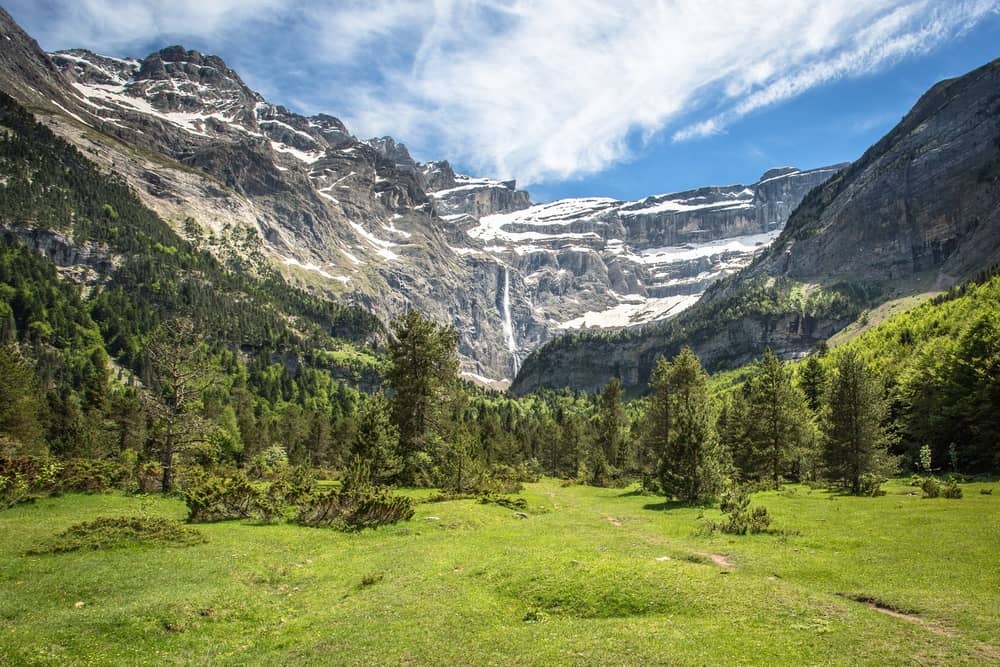
The Pyrenees stretch about 430 km between the Atlantic and the Mediterranean along the border with Spain. One of their most spectacular sights is the Cirque de Gavarnie, a vast natural amphitheater of cliffs topped by peaks around 3,000 m, in the Pyrenees National Park and part of the Pyrénées-Mont Perdu UNESCO World Heritage Site.
The walk from Gavarnie village to the foot of the cirque is easy and suitable for families, taking roughly one and a half to two hours each way. It ends near the Grande Cascade, one of the highest waterfalls in Europe. Experienced hikers can continue on steeper trails toward the Brèche de Roland and the refuges above.
6. Pic du Midi de Bigorre, Pyrenees
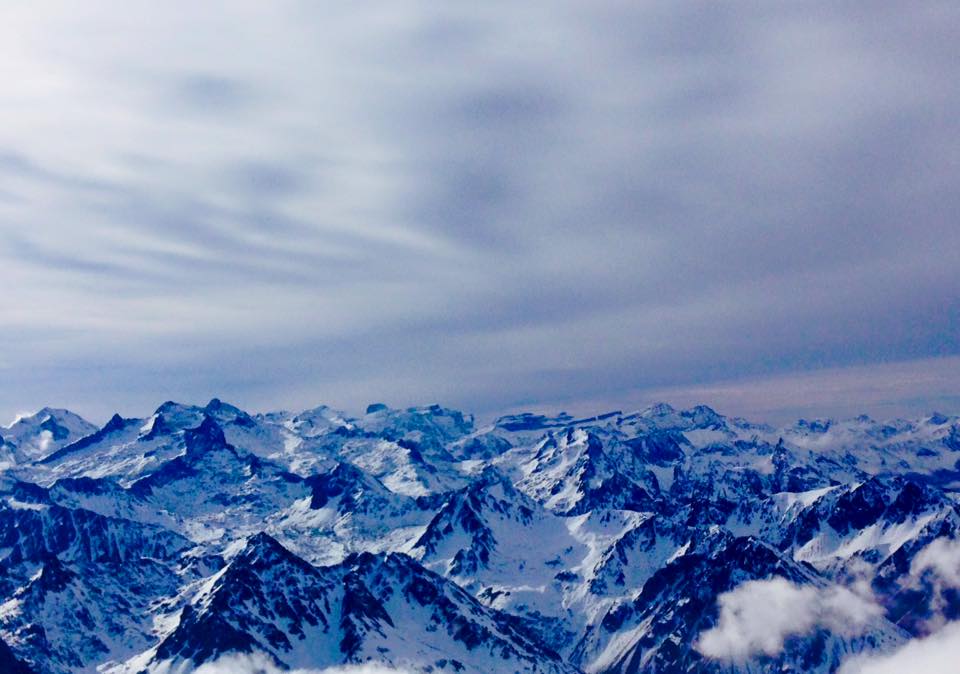
Crowned by a famous astronomical observatory at 2,877 m, the Pic du Midi de Bigorre is known for its 360-degree views of the Pyrenees. The observatory helped map the Moon in the 1960s ahead of the Apollo missions. Today there is a museum and viewing terraces, and you can even book a night at the summit.
Most visitors take the cable car from La Mongie, but fit hikers can climb on foot via the Lac d’Oncet, a long day with more than 1,000 m of ascent. Do not confuse it with the Pic du Midi d’Ossau, a distinctive twin-peaked mountain further west that is also a great hiking area.
7. Grand Colombier, Jura
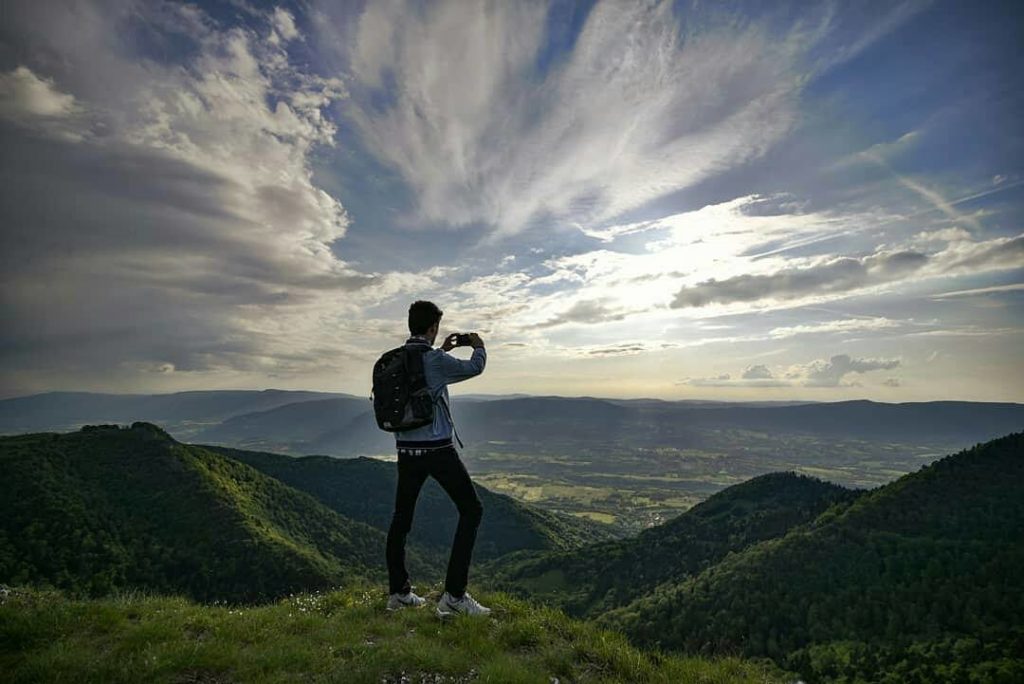
At 1,534 m, the Grand Colombier is the highest point of the southern Jura, in the Ain department. It is far quieter than the Alps, and the summit views are superb: the Lac du Bourget below, the Rhône valley and, on clear days, the chain of the Alps including Mont Blanc. The summit can be reached on hiking trails from the villages below or by shorter walks from the road passes. Cyclists will know it as a famous Tour de France climb.
Further north in the Jura, the Mont d’Or near Métabief is another favorite, with a sheer cliff on its eastern side and wide views toward Switzerland and the Alps.
8. Hohneck, Vosges
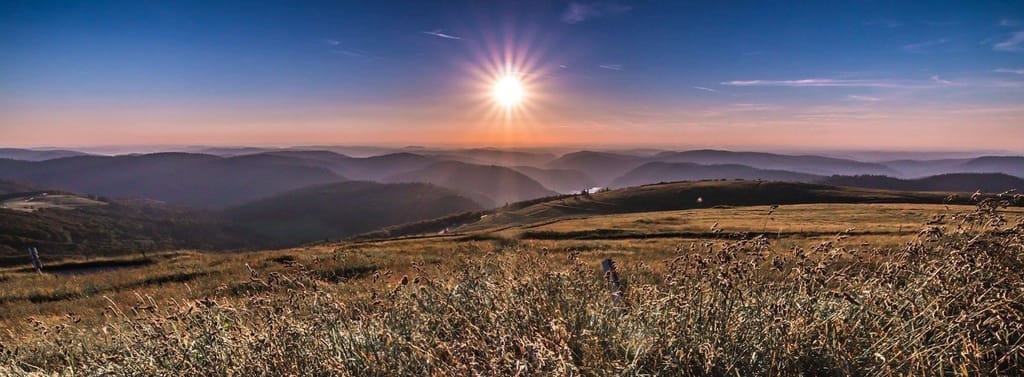
The Vosges, the rounded, forested mountains between Alsace and Lorraine, are perfect for relaxed hiking. At about 1,363 m, the Hohneck is one of the range’s highest summits, set in the Ballons des Vosges Regional Natural Park. Its grassy top offers views over glacial lakes, high pastures and, on clear days, the Alps. The Route des Crêtes passes nearby, so you can choose a short walk or a longer loop from the valleys. Look out for chamois, and stop at a ferme-auberge (farm inn) for a hearty lunch with Munster cheese.
9. Puy de Sancy, Massif Central
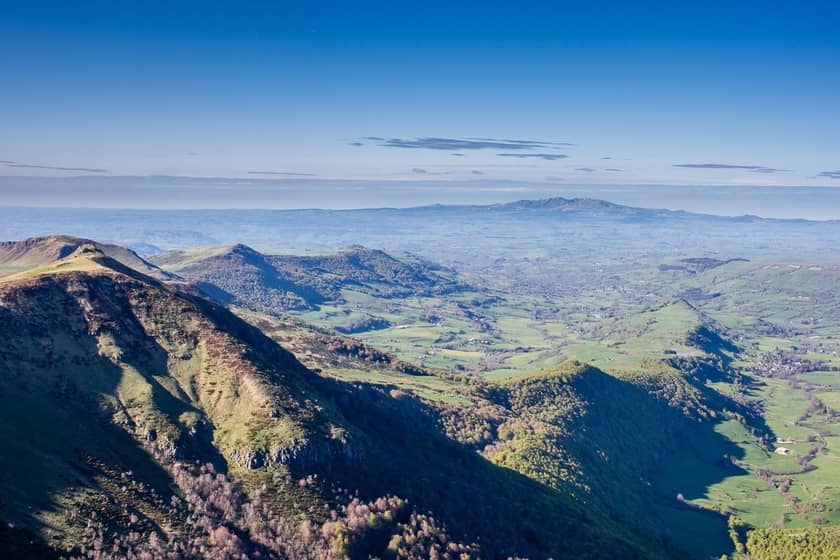
At 1,885 m, the Puy de Sancy is the highest peak of the Massif Central, part of an ancient, long-extinct volcano in the Auvergne Volcanoes Regional Natural Park. The Dordogne River rises on its slopes, from the meeting of two streams, the Dore and the Dogne.
From Le Mont-Dore, a cable car and a stairway take you close to the summit, but the ridge hikes are far more rewarding, with sweeping views over volcanic peaks and valleys. Super-Besse, on the other side, is a ski resort in winter and a hiking base in summer.
10. The GR20 and Monte Cinto, Corsica

The GR20 crosses Corsica from north to south over about 180 km and is often called one of the toughest long-distance trails in Europe. It usually takes around 15 days, with rugged, rocky terrain, chains on some sections and big daily climbs. The northern half is wilder and more demanding; the southern half is a little gentler. The two halves meet at Vizzavona, where hikers can rest, resupply and leave or join the trail by train.
Monte Cinto, at 2,706 m the highest mountain in Corsica, is not on the GR20 itself but can be climbed as a demanding side trip, most often from the Asco valley. The GR20 is for fit, experienced hikers only: refuges and campsites along the route must be booked ahead in summer. Find more about the island in our guide to things to do in Corsica.
Mountain safety tips
- Check the weather before you leave and be ready to turn back. Afternoon thunderstorms are common in summer in the Alps and Pyrenees.
- Start early to avoid heat, storms and crowds.
- Carry the essentials: a map or offline app, water, food, layers, a waterproof jacket, sun protection and a charged phone.
- Know your level. Choose routes that match your fitness and experience, and consider a qualified mountain guide for anything involving glaciers or exposed terrain.
- Check access restrictions such as wildfire closures in Provence or hut reservation requirements in the high mountains.
- Emergency number: call 112 anywhere in Europe; in the French mountains, rescue services are well organized but cannot replace good preparation.
Visiting the mountains in winter instead? See our guide to the best places to ski in France.
Summary
France’s mountains offer hikes for every level: the Tour du Mont Blanc and the GR20 for big adventures, Gavarnie and Hohneck for easy family walks, and Sainte-Victoire, Mourre Nègre, the Grand Colombier, Pic du Midi and Puy de Sancy for rewarding summit days. Choose the right season, prepare well and respect the mountains, and you will discover a side of France many visitors never see.
