Marseille Travel Guide
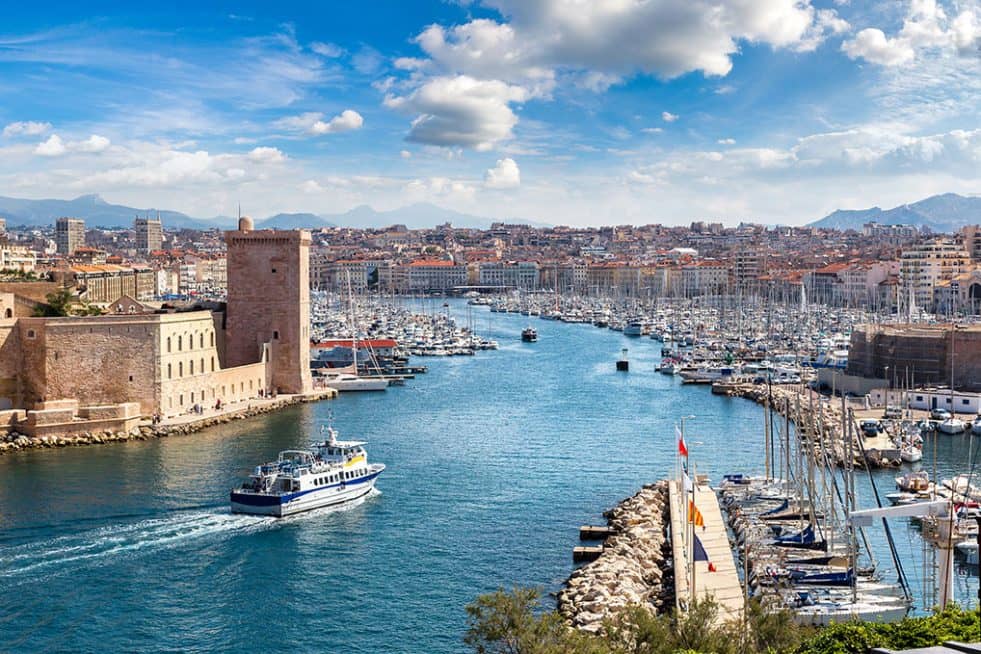
Marseille is France’s second-largest city and its oldest, founded by Greek sailors from Phocaea around 600 BC. It is a busy, multicultural port with a real Mediterranean energy: a historic harbor, a hilltop basilica, a colorful old quarter, excellent seafood and the dramatic Calanques National Park right on its doorstep. Plan two to three days to see the highlights, more if you want beaches and day trips.
This guide covers the main sights, what to eat, where to stay, the city beaches and practical tips for getting around.
Marseille at a glance
| Details | |
|---|---|
| Location | Mediterranean coast of Provence, about 30 km south of Aix-en-Provence and roughly 200 km west of Nice |
| Role | Capital of the Provence-Alpes-Côte d’Azur region and France’s largest commercial port |
| Getting there | TGV from Paris in a little over 3 hours; Marseille Provence Airport at Marignane |
| Ideal stay | 2–3 days for the city, 4–5 with the Calanques and day trips |
| Best time | April–June and September–October; summer is hot and busy |
For routes and travel times from the capital, see how to get from Paris to Marseille.
Top sights in Marseille
Notre-Dame de la Garde
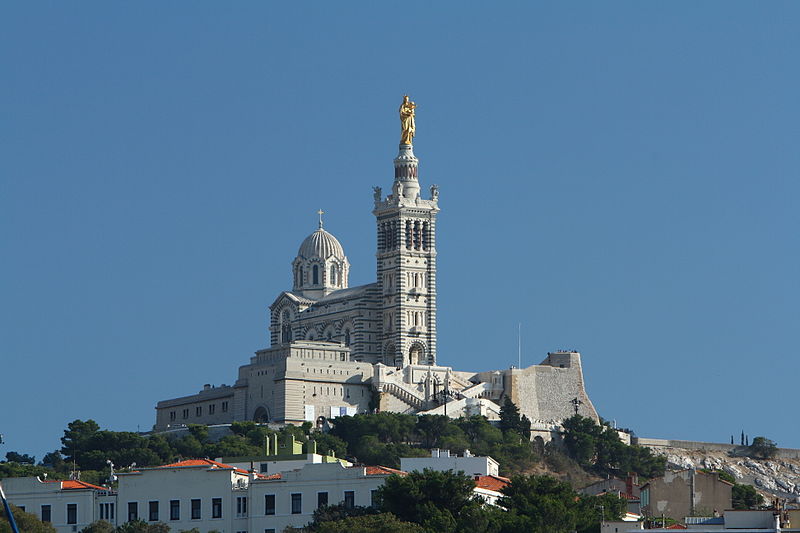
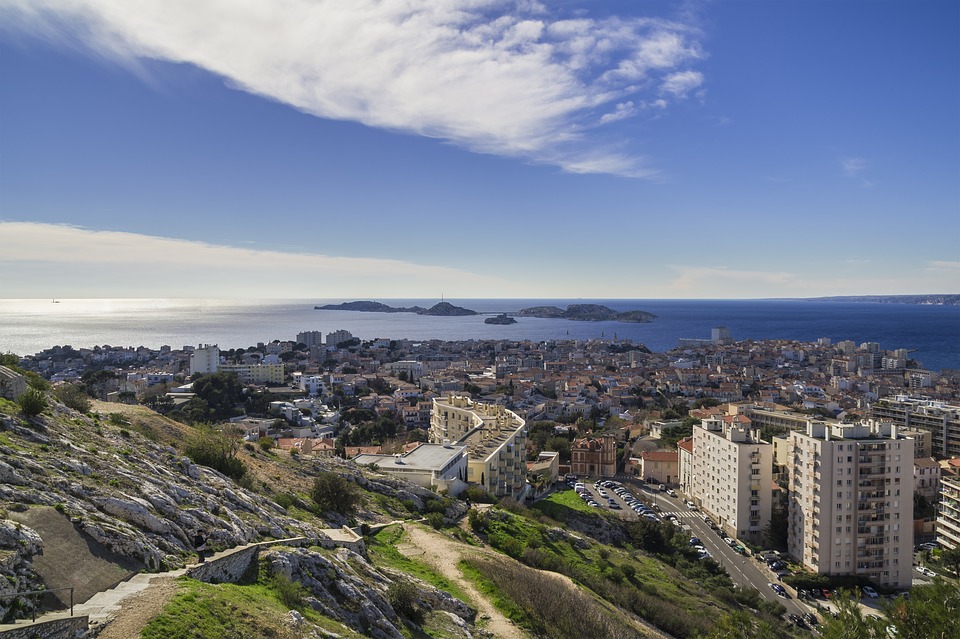
Built between 1853 and 1864 on the city’s highest point, the Basilica of Notre-Dame de la Garde is visible from almost everywhere in Marseille. A huge gilded statue of the Virgin and Child crowns its bell tower, and locals call her “La Bonne Mère”, the protector of sailors and fishermen. Inside, the Neo-Byzantine church glitters with striped marble and gold mosaics, and the walls are covered with ex-votos: paintings, model boats and even model planes offered in thanks. The terrace gives a 360-degree view over the rooftops, the harbor and the Frioul islands. You can walk up (it is steep), take a city bus or ride the tourist train from the Old Port.
The Vieux Port (Old Port)
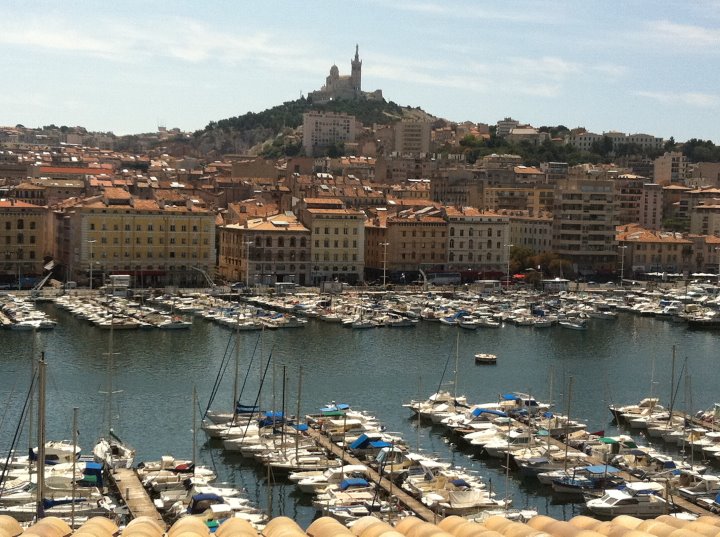
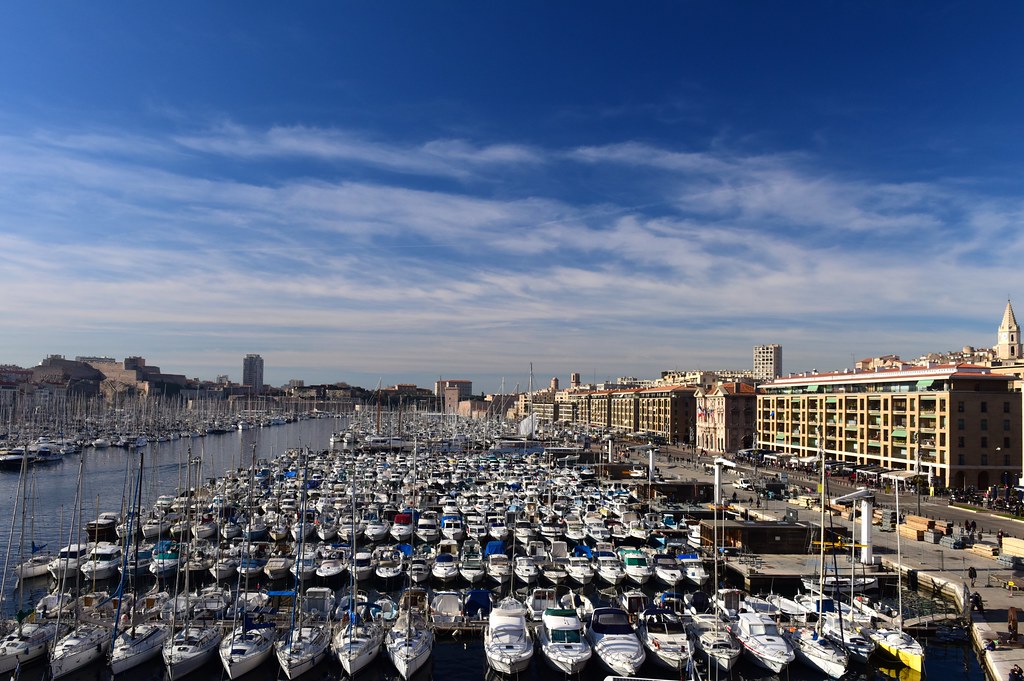
The Old Port is where Marseille began and still the heart of the city, at the foot of the Canebière boulevard. Today it is filled with pleasure boats and fishing boats rather than cargo ships. Every morning, fishermen sell their catch at a small market on the quay at the end of the harbor. Look for Norman Foster’s mirrored canopy, the Ombrière, which reflects the people walking underneath.
Ferries leave from the Old Port for the Château d’If, the island fortress made famous by The Count of Monte Cristo, and for the Frioul islands. Boat trips also run along the coast to the Calanques. If you want to stay right by the water, see our guide to hotels near the Vieux Port.
MuCEM and Fort Saint-Jean
At the harbor entrance, the MuCEM (Museum of European and Mediterranean Civilizations) opened in 2013 in a cube wrapped in lace-like concrete. A footbridge links it to the 17th-century Fort Saint-Jean, whose gardens and ramparts are a lovely place for a walk. Next door stands the striped Romano-Byzantine Cathédrale de la Major, one of the largest cathedrals built in France in the 19th century.
Le Panier
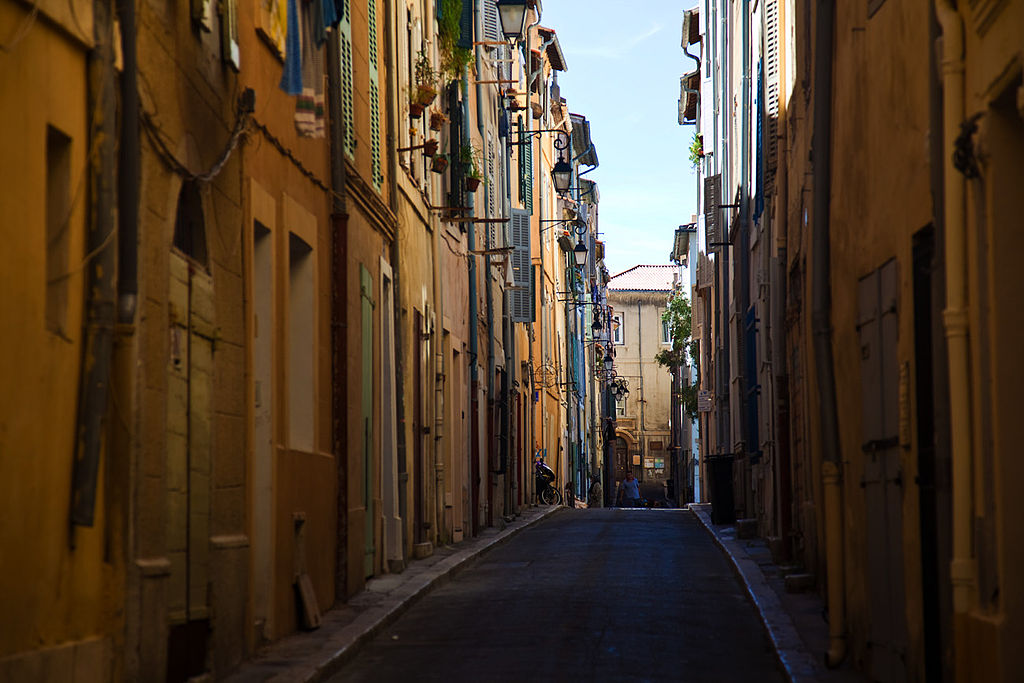
Le Panier, on the hill north of the Old Port, is Marseille’s oldest neighborhood, inhabited since the Greek settlement. Its steep lanes, staircases, pastel houses and street art make it the best area in the city for wandering. Once a working-class district, it now has artisan shops, soap makers, cafés and small galleries. At its center, the Vieille Charité, a 17th-century almshouse built around a chapel with an elegant oval dome, houses museums of Mediterranean archaeology and of African, Oceanian and Amerindian art. On the way up from the harbor, look for the 17th-century Hôtel de Ville on the Quai du Port.
Calanques National Park
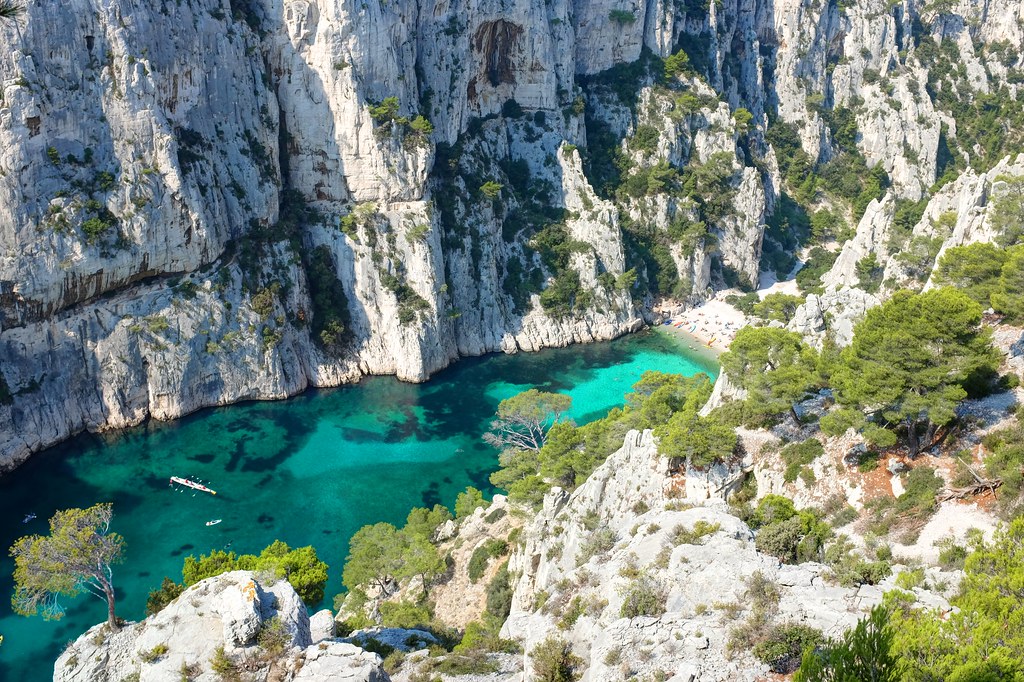
East of the city, white limestone cliffs plunge into turquoise coves called calanques. The area became a national park in 2012 and stretches from Marseille to Cassis. You can visit:
- By boat: cruises leave from the Old Port and from Cassis and are the easiest way to see several calanques in one trip.
- On foot: trails lead to Sormiou, Morgiou, Sugiton and En-Vau. The full coastal GR 98 from Marseille to Cassis is a long, demanding hike that takes most of a day.
- By kayak or paddleboard: guided trips launch from Pointe Rouge and Les Goudes.
In summer, access to parts of the massif can be restricted or closed on days of high fire risk, and some popular coves such as Sugiton have used a free reservation system at peak times. Check the national park’s website the day before you go, bring plenty of water and wear proper shoes. More ideas are in our guide to day trips from Marseille.
Stade Vélodrome
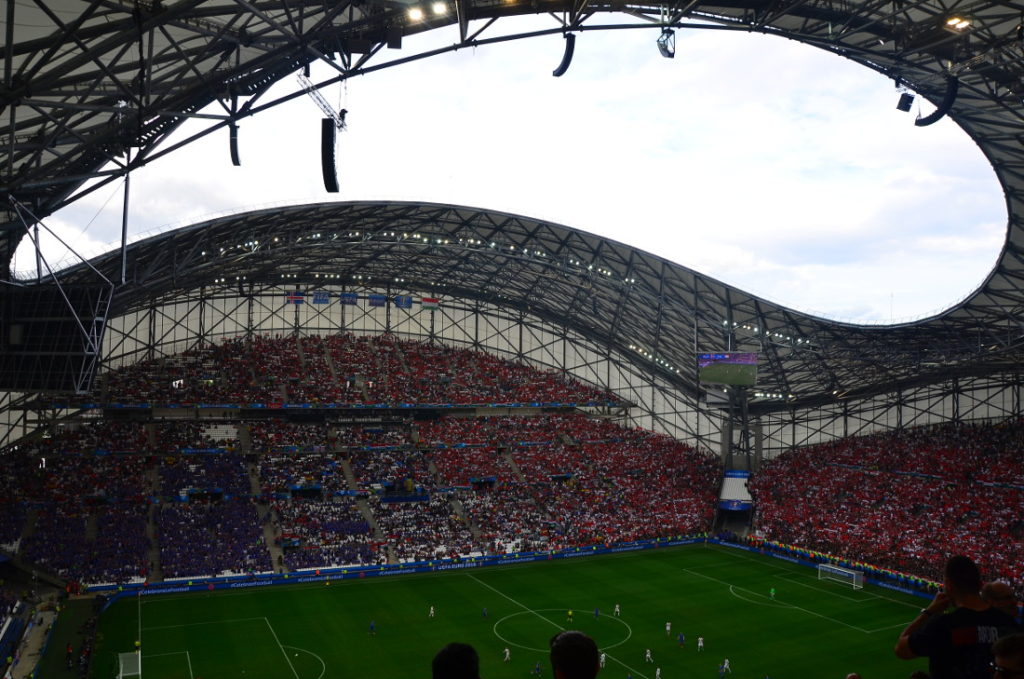
Football is close to a religion in Marseille, and Olympique de Marseille is its church. The Stade Vélodrome opened in 1937 and was renovated ahead of Euro 2016, when it gained its wave-like roof. With room for about 67,000 spectators, it is the largest club stadium in France. If you cannot get match tickets, guided stadium tours take you behind the scenes to the changing rooms and pitch side.
What to eat in Marseille
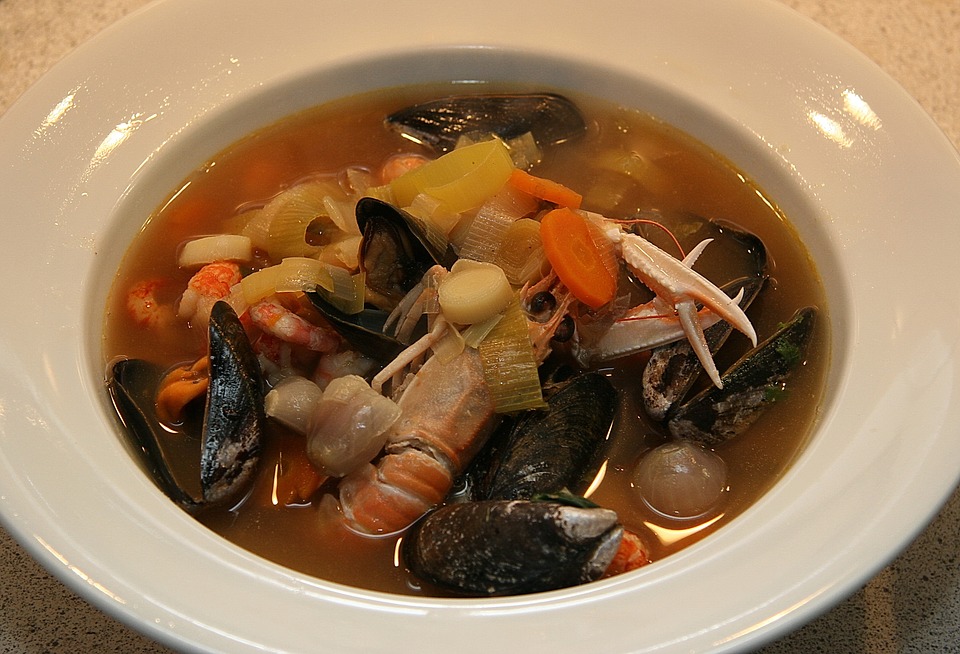
Marseille’s signature dish is bouillabaisse, a fish stew first made by fishermen with the bony rockfish they could not sell, such as scorpionfish (rascasse), conger eel and gurnard. The fish is cooked with olive oil, tomatoes, fennel and saffron. The broth is served first with croutons and rouille, a garlicky saffron mayonnaise, and the fish follows. A proper bouillabaisse is expensive and usually needs to be ordered in advance; very cheap versions are rarely the real thing.
Other local tastes to try:
- Navettes: boat-shaped biscuits flavored with orange blossom
- Panisse: fried chickpea-flour fritters, a classic street snack
- Pieds paquets: a traditional dish of lamb tripe and trotters for the adventurous
- Pastis: the anise-flavored aperitif of Provence, served with cold water
- Local wine: white wine from Cassis with seafood, or rosé from Bandol and Provence
Thanks to its long history of immigration, Marseille is also one of the best places in France for North African, Armenian, Comorian and Vietnamese food. Head to the Noailles market near the Canebière for spices, street food and a lively atmosphere.
Where to stay in Marseille
The Vieux Port is the most convenient base for first-time visitors. Le Panier suits travelers who want character, while the Prado and Corniche areas in the south are better for beaches. Here are three hotels with very different styles:
Golden Tulip Villa Massalia
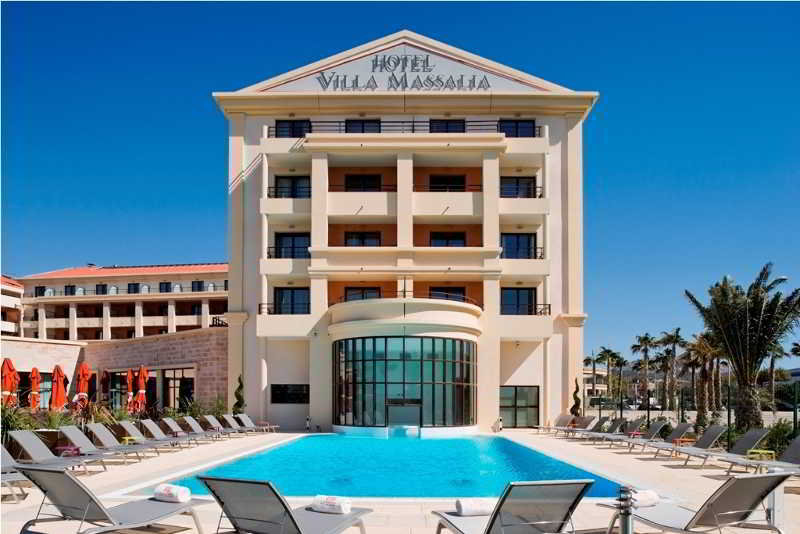
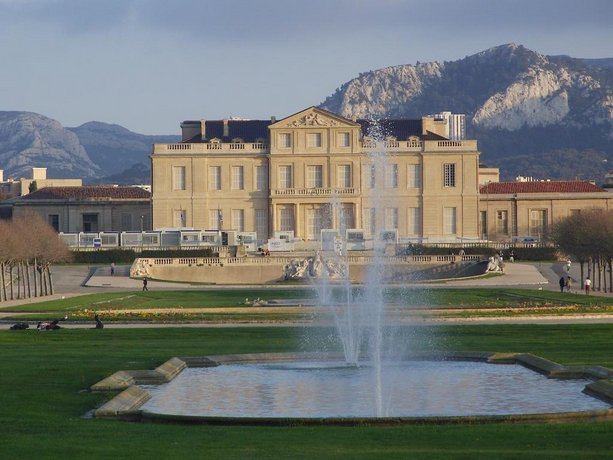
This upscale hotel in the 8th arrondissement sits next to Parc Borély, a short walk from the Prado beaches. It has an outdoor pool, a spa with a hammam and a fitness room, and some rooms have balconies or terraces. It is a good choice if you want a resort feel with easy access to the seafront rather than the historic center.
Les Chambres de Jeannette
A friendly guesthouse-style option in the 9th arrondissement, close to the Sainte-Marguerite Dromel metro station, which gives you a direct ride to the center. It is about ten minutes from the Stade Vélodrome, making it practical for football fans. Rooms are modern and air-conditioned, and the hosts are known for their local tips.
Le Ryad Boutique Hôtel
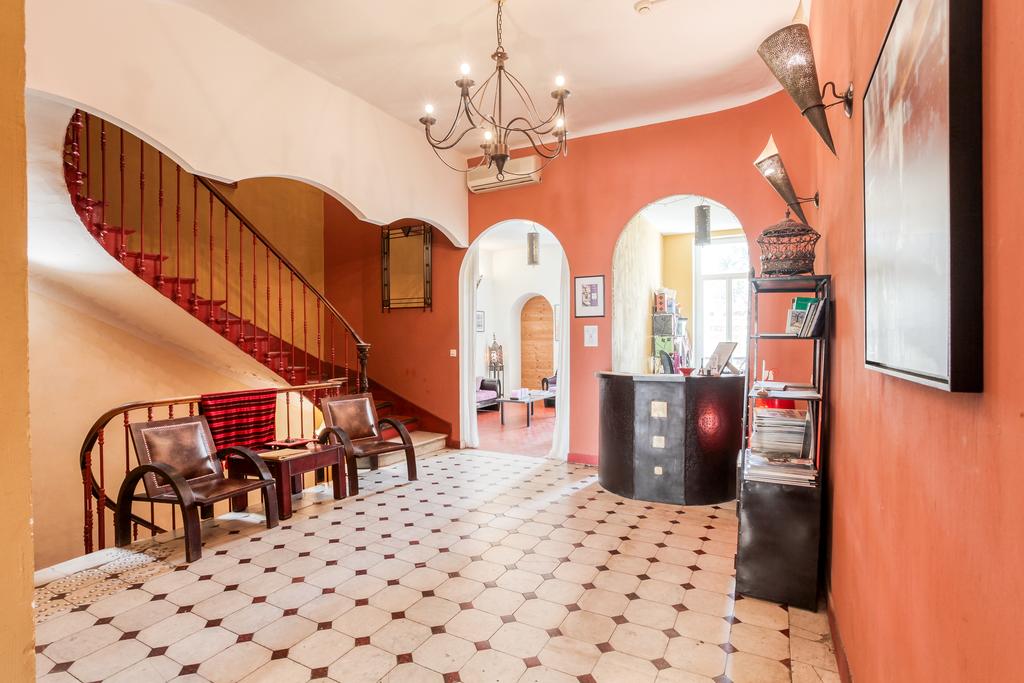
Le Ryad is a small Moroccan-inspired hotel in the 1st arrondissement, around ten minutes’ walk from Saint-Charles train station and close to the Canebière. Its decor, tiled bathrooms and quiet garden make it feel far from the city bustle. A good pick for travelers arriving by train.
Marseille’s city beaches
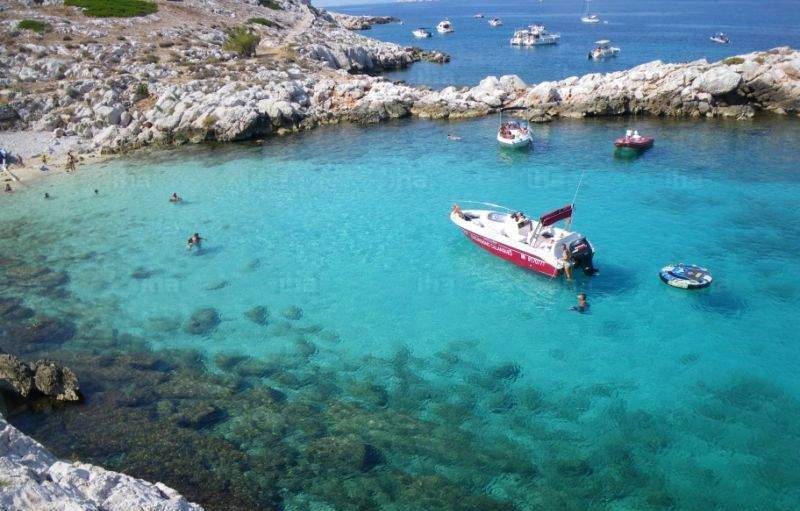
Marseille’s urban beaches are not as glamorous as those on the Riviera, but they are perfect for a swim between sightseeing. The main options are:
- Plage des Catalans: the closest sandy beach to the Old Port, small and busy, with beach volleyball and lifeguards in season.
- Plages du Prado: the large beach park south of the center, with lawns, sports areas and restaurants. It hosted the FIFA Beach Soccer World Cup in the 2000s.
- Plage Borély: a mostly pebbly stretch next to the Prado, popular with windsurfers when the wind is up.
- Plage de la Pointe Rouge: a family favorite with fine sand and shallow water, plus water sports rentals. Parking is hard in summer, so take the bus.
For quieter coves and beaches outside the city, read our guide to the best beaches near Marseille.
Practical tips for visiting Marseille
- Getting around: the center is walkable. RTM runs two metro lines, three tram lines and many buses; the 83 bus follows the scenic Corniche to the beaches. A summer boat shuttle crosses the bay from the Old Port.
- The mistral: this strong, cold northwesterly wind can blow for days and may cancel boat trips. Have a backup plan.
- Safety: the tourist center is generally fine with normal city precautions. Watch your belongings around Saint-Charles station, the Canebière and Noailles, and avoid wandering in unfamiliar neighborhoods late at night. See areas to avoid in Marseille for details.
- Summer: July and August are hot and crowded. Visit the Calanques early in the morning and book boat trips ahead.
Summary
Marseille combines 2,600 years of history with a raw, lively port-city character you will not find elsewhere in France. Start at the Old Port, climb to Notre-Dame de la Garde, get lost in Le Panier, visit the MuCEM, eat a real bouillabaisse and spend a day in the Calanques. Two to three days is a good minimum. For a fuller list of ideas, see our things to do in Marseille.
