
Grenoble Travel Guide
Grenoble is the largest city in the French Alps, set where the Isère and Drac valleys meet and surrounded on three sides by mountains: the Chartreuse to the north, the Vercors to the west and the Belledonne range to the east. It is a lively university city with a compact old town, a famous hilltop fortress reached by cable car, and hiking, climbing and skiing within easy reach.
This guide covers what to see in town, where to shop, eat and go out, and how to get into the mountains around Grenoble. It mixes practical advice with notes from time spent living just outside the city.
Is Grenoble worth visiting?
Yes, especially if you like cities with quick access to the outdoors. Grenoble does not have the postcard old town of Annecy or the big-name museums of Lyon, but it rewards a stay of two or three days: ride up to the Bastille, wander the old squares, eat well for a reasonable price and spend at least one day hiking or skiing nearby. It also makes a practical base for the ski resorts of the Isère department.
Ride the cable car to the Bastille
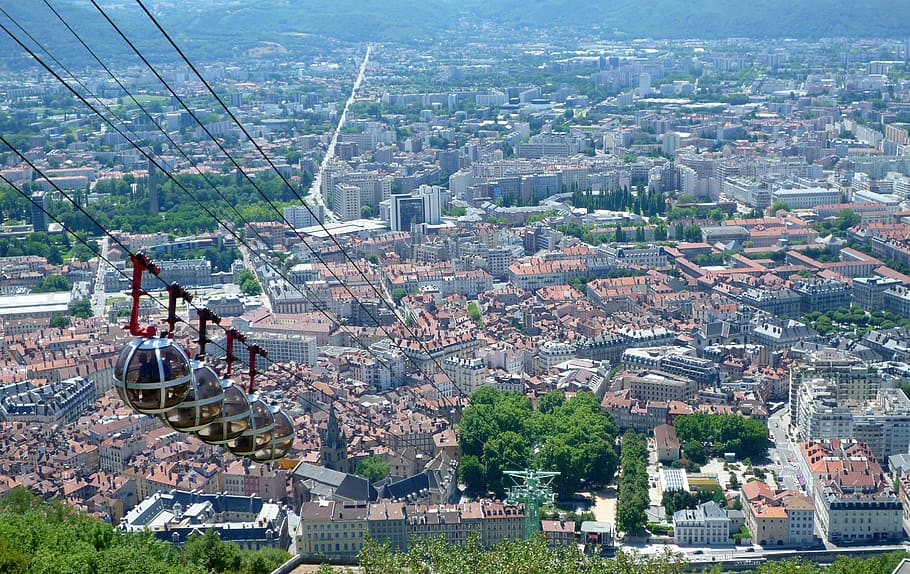
The Grenoble-Bastille cable car, with its spherical cabins that locals call les bulles (the bubbles), is the city’s best-known attraction. It opened in 1934, which makes it one of the oldest urban cable cars in the world. The lower station is on the south bank of the Isère, on Quai Stéphane-Jay, close to the old town.
The ride itself is short but gives great views over the rooftops and the river. From the Bastille fortress at the top, the panorama opens up to the surrounding peaks, and on clear days you can see the high summits of the Alps in the distance. Expect crowds in summer and on sunny weekends, so go early in the day if you can. There are places to eat and drink at the top; they are convenient, but you will usually find better value back in town.
Walking up instead
If you prefer to walk, the climb to the Bastille takes roughly 30 to 45 minutes. One route starts from the Saint-Laurent quarter on the north bank of the Isère. Another pleasant option passes through the Jardin des Dauphins, a terraced garden on the slope. Many people walk up and take the cable car down, which is easier on the legs and still gives you the view. Check the cable car’s current timetable before you go, as hours vary by season and the service closes for maintenance at certain times of year.
Parks and green spaces
- Parc Paul Mistral: a large park east of the center, home to the town hall and the Tour Perret, a concrete tower built for the 1925 International Exhibition of Hydropower and Tourism.
- Jardin de Ville: a quiet, central garden near the river and the cable car station.
- Jardin Hoche: a pretty formal garden south of the city center.
- Jardin des Dauphins: the hillside garden on the way up to the Bastille.
Shopping in Grenoble
Grenoble’s tram network is the easiest way to move around the center. For shopping, head to the area around Place Grenette and Rue Félix Poulat. The pedestrian streets of the old town nearby are lined with cafés, bakeries, restaurants and independent shops, and it is a charming area to stroll even if you are not buying anything.
For a more modern feel, Boulevard Édouard Rey and Boulevard Gambetta have larger chain and designer stores, with Place Victor Hugo, a lively square with a fountain, between them. If you prefer a shopping mall, Grand’Place is a large center in Échirolles, just south of Grenoble and reachable by tram.
Eating out
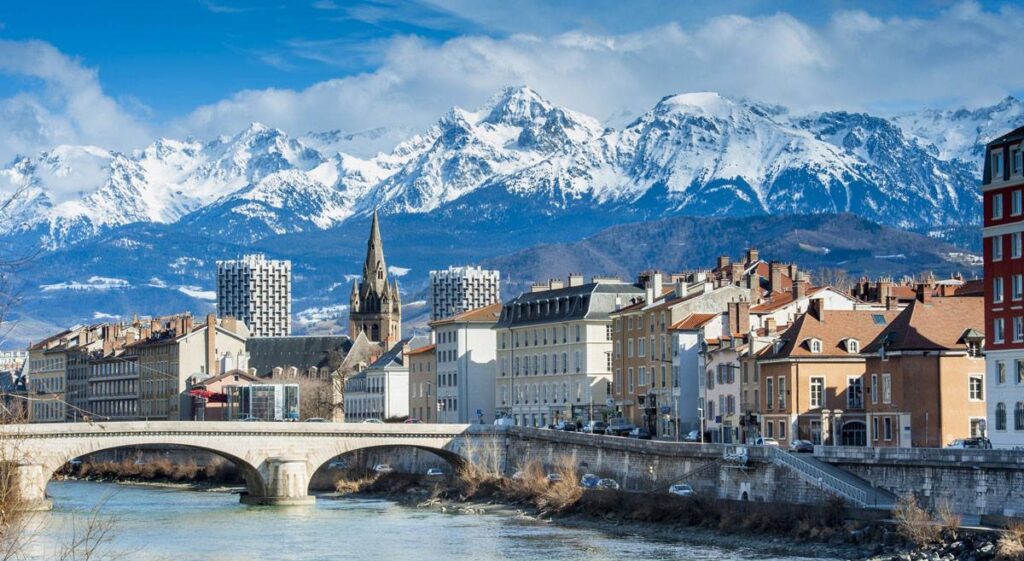
Grenoble is a good city for eating out, with plenty of affordable options thanks to its large student population. The riverside quays on the north bank of the Isère, in the Saint-Laurent quarter, have a long row of restaurants, many of them pizzerias and Italian places, with views back across the river to the old town. The old town squares around Place Notre-Dame and Place Saint-André are also full of brasseries and terraces.
Local specialties worth trying include:
- Gratin dauphinois: the famous potato gratin, named after the Dauphiné region of which Grenoble was the capital.
- Noix de Grenoble: walnuts with a protected designation of origin, used in cakes and tarts.
- Ravioles du Dauphiné: tiny cheese-filled pasta, often served gratinated.
- Chartreuse: the green or yellow herbal liqueur made by Carthusian monks in the nearby Chartreuse massif.
- Mountain cheeses such as Saint-Marcellin and Bleu du Vercors-Sassenage.
Keep in mind that the French usually eat dinner later than many visitors are used to; restaurants fill up from around 8 p.m., and many kitchens close between lunch and dinner.
Nightlife
Going out in Grenoble is relaxed. Because so many students live here, the dress code in most bars is casual: jeans, sneakers and a sweater are perfectly normal, and you rarely need to dress up to get in.
The squares of the old town are the heart of the nightlife. Around Place Notre-Dame you will find several popular bars that get very crowded on weekends. The London Pub on Rue Brocherie is a long-standing, two-floor pub that draws an international student crowd, and Le Couche Tard, a sports-themed pub on Rue du Palais, is another student favorite. Other lively squares to explore include Place Saint-André, Place aux Herbes and Place de Gordes.
Grenoble attracts students from all over the world, so it is easy to meet people from many countries in one evening. Locals tend to be friendly and happy to recommend places to go. You may also come across clubs where people dance le rock, the French take on swing and jive, which is still popular here.
If you are traveling through the Alps for the après-ski scene, see our guide to what Chamonix is known for.
Getting into the mountains
Do not leave Grenoble without spending time in the mountains. Skiing, via ferrata, rock climbing and hiking are all close by, and even a short walk above the city gives you fresh air and big views.
A hike above Montbonnot and the Saint-Eynard
The Chartreuse foothills just north-east of Grenoble are ideal for a half-day hike. From the area around Montbonnot, about ten minutes from the city, forest paths climb past the Fort du Bourcet below the cliffs of the Chartreuse, with glimpses of Mont Saint-Eynard. Misty mornings are especially atmospheric, when the haze lies over the Grésivaudan valley like a veil.
Another popular route leads up to the Fort du Saint-Eynard, a 19th-century fort on the clifftop above the city with a panoramic view over Grenoble and the Belledonne range. You can drive or walk up, picnic, then follow the small, winding roads and paths downhill through the hamlets above Corenc and La Tronche. Buses back to Grenoble from these villages can be infrequent, so check the timetable or plan to walk back to the city.
Skiing near Grenoble
Several well-known ski resorts are within roughly one to two hours of Grenoble, including Chamrousse (the closest, in the Belledonne range), Les Deux Alpes and Alpe d’Huez. Grenoble hosted the 1968 Winter Olympics, and the region remains one of France’s main winter sports areas. For budgeting, read whether Alpe d’Huez is expensive and what to expect in Les Deux Alpes, or browse our list of the best places to ski in France.
In summer, the Vercors and Chartreuse regional nature parks offer hundreds of kilometers of marked trails. For more inspiration, see the best mountain hikes in France.
Practical tips
| Topic | What to know |
|---|---|
| Getting there | Grenoble has direct trains from Lyon (about 1.5 hours) and some direct TGVs from Paris (about 3 hours). Lyon-Saint Exupéry is the main nearby airport. |
| Getting around | The tram and bus network covers the center and suburbs; the old town is easy to explore on foot. |
| When to go | Winter for skiing, late spring to early fall for hiking. Summers in the valley can be hot. |
| How long to stay | Two to three days for the city and a hike; longer if you plan to ski or explore the nature parks. |
If you are combining Grenoble with other cities, our Lyon travel guide is a natural next step.
Summary
Grenoble combines a lively, affordable student city with some of the best mountain scenery in France. Ride the bubbles to the Bastille, explore the squares of the old town, try gratin dauphinois and local walnuts, and save at least a day for the Chartreuse, Vercors or Belledonne. It is an easy, rewarding stop for anyone traveling through the French Alps.
