
Most Popular Traditional French Dishes and Where to Try Them
The most popular traditional French dishes are slow-cooked regional classics: boeuf bourguignon and coq au vin from Burgundy, cassoulet and duck confit from the southwest, bouillabaisse, ratatouille and salade niçoise from the Mediterranean coast, and cheese-rich fondue and tartiflette from the Alps. For dessert, tarte Tatin and soufflé are the two names you will see everywhere.
Most of these started as home or peasant cooking that made the most of local ingredients, which is why they still taste best in the region they come from. Below is what each dish is, where it comes from, and where in France to order it.
Quick overview
| Dish | Type | Home region | Best season |
|---|---|---|---|
| Boeuf bourguignon | Beef stew in red wine | Burgundy | Autumn and winter |
| Coq au vin | Chicken braised in wine | Burgundy (with regional versions) | Year-round |
| Cassoulet | Bean and meat casserole | Languedoc (Castelnaudary, Carcassonne, Toulouse) | Autumn and winter |
| Confit de canard | Slow-cooked duck leg | Southwest (Gascony, Périgord) | Year-round |
| Moules marinières | Mussels in white wine | Atlantic and Channel coasts | Summer to early autumn |
| Bouillabaisse | Fish soup and stew | Marseille | Year-round |
| Salade niçoise | Composed salad | Nice | Summer |
| Ratatouille | Vegetable stew | Nice and Provence | Summer |
| Flamiche | Savory tart | Northern France (Picardy, Flanders) | Year-round |
| Fondue savoyarde | Melted cheese | Savoie | Winter |
| Tartiflette | Potato and cheese bake | Haute-Savoie | Winter |
| Tarte Tatin | Upside-down apple tart | Loire Valley (Sologne) | Autumn and winter |
| Soufflé | Baked egg dish, sweet or savory | Classic French cuisine | Year-round |
Meat and poultry classics
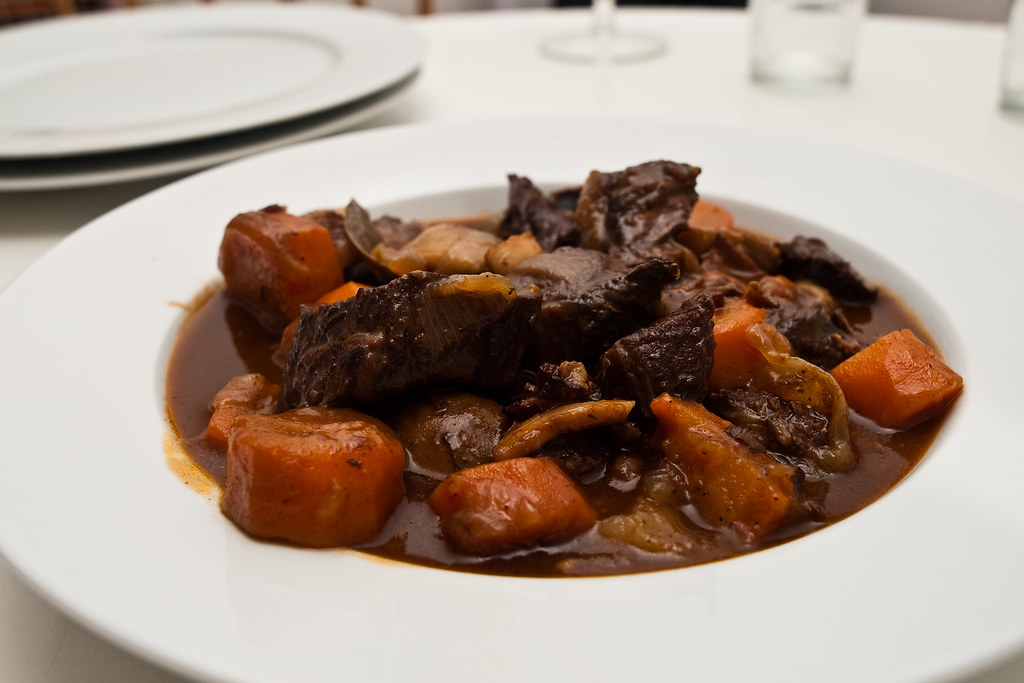
Boeuf bourguignon
Beef bourguignon is beef braised slowly in red Burgundy wine with lardons, onions, carrots and mushrooms until the meat falls apart. It began as a way to make tough cuts tender, often with the meat marinated in wine overnight before cooking. Today it is a bistro staple across France, but Burgundy, including Dijon and Beaune, is the natural place to try it, usually with boiled potatoes, mashed potatoes or fresh pasta.
Coq au vin
Coq au vin means “rooster in wine”: a bird braised with wine, lardons, mushrooms, onions and garlic, sometimes flambéed with brandy. The long braise was designed for older, tougher birds, though most cooks now use chicken. The classic version uses red Burgundy, but regions make their own: coq au Riesling in Alsace, coq au vin jaune in the Jura and coq au Champagne in Champagne. American cook Julia Child helped make the dish famous outside France.
Cassoulet
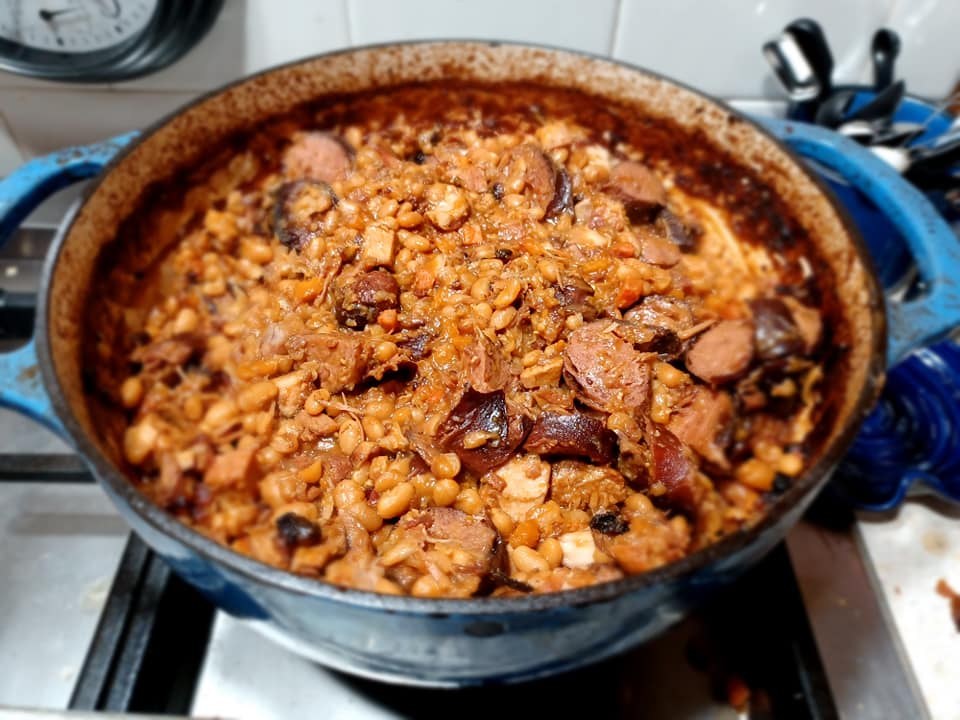
Cassoulet is a rich casserole of white beans slow-cooked with pork, sausage and duck or goose confit (some versions add mutton). It belongs to the Languedoc, where Castelnaudary, Carcassonne and Toulouse each claim their own version. The name comes from the cassole, the glazed clay pot it is baked in. It is a heavy, comforting winter dish, so share a portion or skip the starter.
Confit de canard (duck confit)
Duck confit is one of the great dishes of southwest France. Duck legs are salted with garlic and thyme, usually overnight or for a day, then cooked very slowly in their own fat. This old preservation method gives tender meat and crisp skin once the leg is browned before serving. Look for it in Gascony and the Périgord, often with pommes sarladaises, potatoes sautéed in duck fat with garlic and parsley.
Seafood dishes
Moules marinières
Moules marinières is a big pot of mussels steamed in white wine with shallots and parsley; versions with cream are common too. Served with fries, it becomes moules-frites, a favorite in northern France and on the Channel and Atlantic coasts. A glass of Muscadet from the Loire is the classic pairing.
Bouillabaisse
Bouillabaisse is Marseille’s famous fish dish. Several kinds of Mediterranean rockfish and other fish are cooked in a broth flavored with saffron, fennel, garlic and tomato. The broth is traditionally served first with croutons and rouille, a garlic and chili mayonnaise, followed by the fish. A proper bouillabaisse is expensive because it needs a lot of fresh fish, so be wary of very cheap versions; many restaurants ask you to order it in advance. If you are traveling along the coast, see our list of foods to try in the South of France.
Mediterranean vegetables and salads
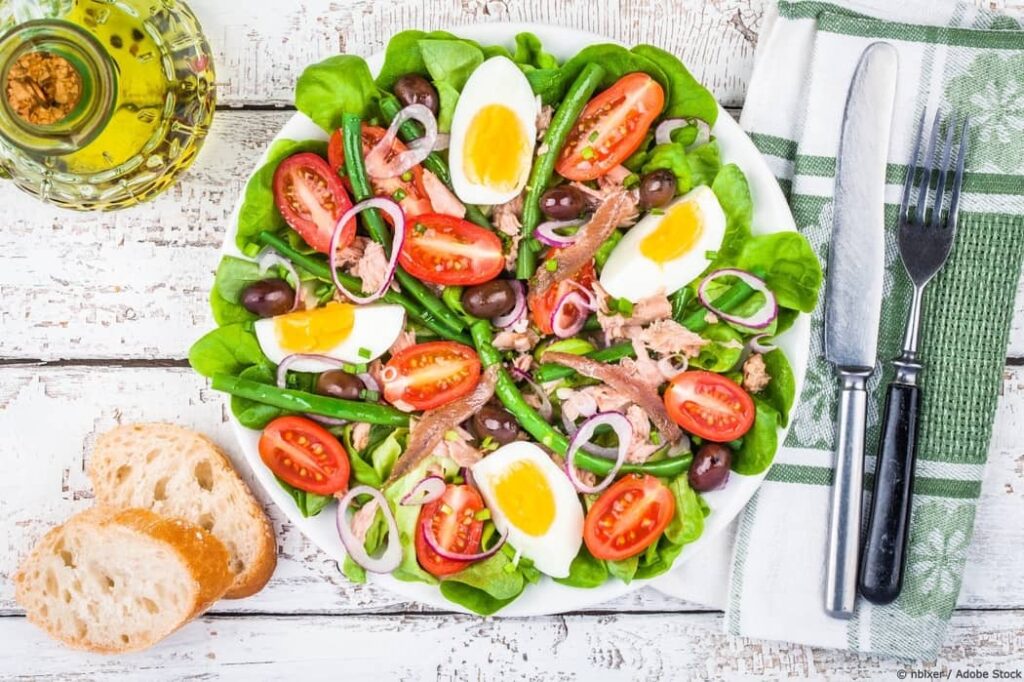
Salade niçoise
Salade niçoise comes from Nice and can be a side dish or a light lunch. The base is tomatoes, hard-boiled eggs, small black Niçoise (Cailletier) olives and anchovies or tuna, often with raw vegetables such as peppers, radishes or young fava beans. Locals argue about lettuce, cooked potatoes and green beans, which purists leave out. It is a summer dish best eaten in Nice itself.
Ratatouille
Ratatouille is a stew of eggplant, zucchini, peppers, tomatoes, onions and garlic cooked in olive oil, also from Nice and Provence. Many cooks sauté each vegetable separately before combining them so each keeps its texture. It can be a starter, a side dish or a main with bread, and it is just as good cold the next day. The 2007 Pixar film made the name famous worldwide, although the layered dish in the film is closer to a variation called confit byaldi.
Northern and mountain dishes
Flamiche
Flamiche is a savory tart from northern France near the Belgian border; the name is said to come from the Flemish word for cake. The best-known filling is leeks cooked with cream and eggs, sometimes with Maroilles cheese, in a pastry crust. Some versions are open-topped and closer to a quiche. You will find it in Picardy and French Flanders, including around Amiens and Lille.
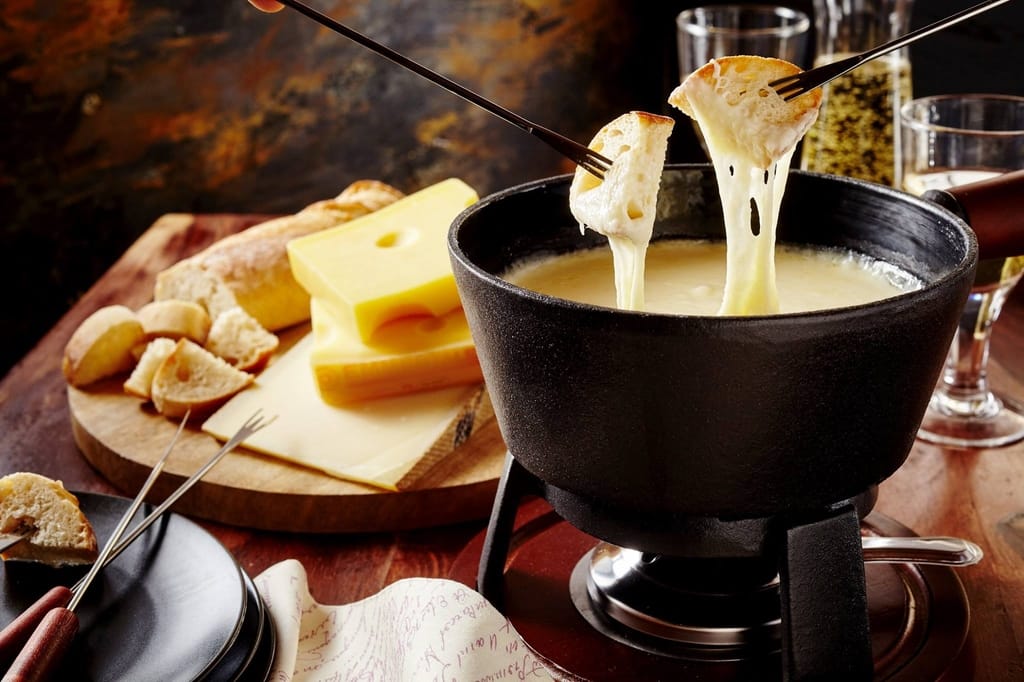
Fondue savoyarde
Fondue savoyarde is a pot of cheese melted with dry white wine and garlic, kept warm over a burner and eaten by dipping cubes of bread on long forks. The usual French mix is Beaufort, Comté and Emmental de Savoie. It is the classic dinner in Alpine ski resorts, and most restaurants serve it for a minimum of two people.
Tartiflette
Tartiflette layers potatoes, onions, lardons and cream under a whole Reblochon cheese, baked until bubbling. Although it feels ancient, the dish in its current form was popularized in the 1980s to promote Reblochon, inspired by older Savoyard potato dishes. A variation called croziflette swaps potatoes for crozets, small square pasta from Savoie.
For more on the cheeses behind these dishes, read our French cheese guide.
Desserts
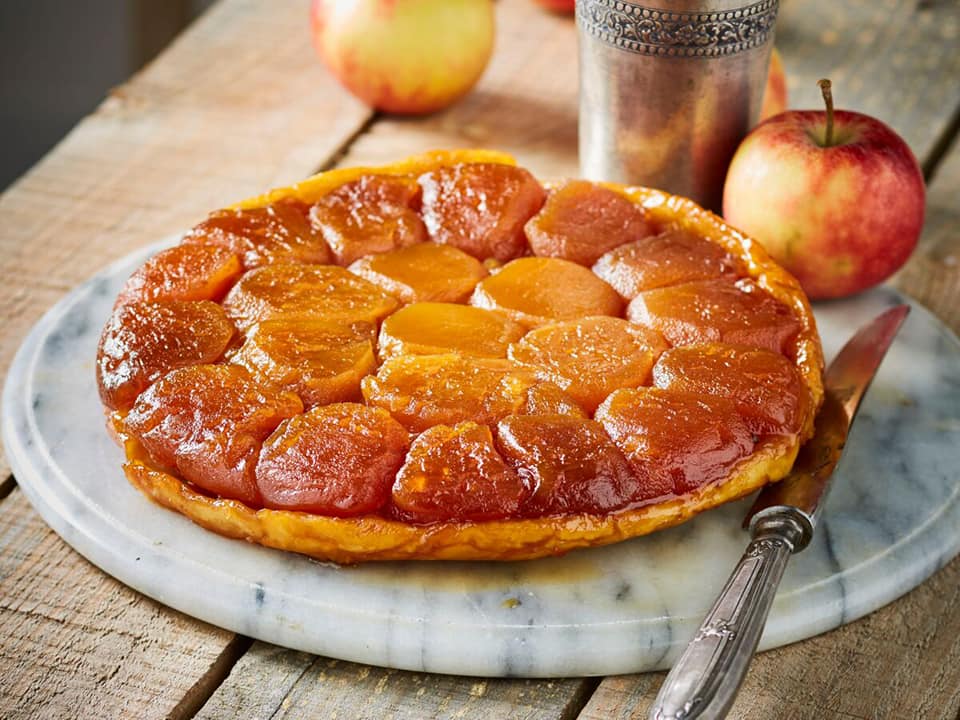
Tarte Tatin
Tarte Tatin is an upside-down apple tart: apples are caramelized in butter and sugar, covered with pastry, baked and turned out so the glossy fruit sits on top. It is linked to the Tatin sisters, Stéphanie and Caroline, who ran a hotel in Lamotte-Beuvron in the Sologne in the late 19th century. The popular story says one sister made the tart by mistake, but that is legend rather than documented fact. It is usually served warm with crème fraîche or vanilla ice cream.
Soufflé
Soufflé means “puffed up” or “blown”, which describes how beaten egg whites make it rise in the oven. Soufflés appear in French cookbooks from the 18th century and were refined by 19th-century chefs. The chocolate version is a dessert favorite, while cheese soufflé makes an elegant starter. Order it at the start of the meal if the menu asks, since it is baked to order. For more sweet ideas, see our list of French pastries you must try.
Tips for trying traditional French dishes
- Eat regionally: order bouillabaisse in Marseille, cassoulet in the Languedoc and fondue in the Alps rather than the same dishes everywhere.
- Look for the plat du jour or the lunch formule, which is often the best value for slow-cooked classics.
- Look for a fait maison (homemade) label on menus.
- Respect the seasons: mountain and stew dishes are mostly winter food, while salads and ratatouille shine in summer.
- Pair with local wine: Burgundy with boeuf bourguignon, Muscadet with mussels, and a rosé from Provence with Mediterranean dishes.
To build a full meal, start with our guide to popular French appetizers, pick a drink from our list of the most popular French drinks, and see what French people eat every day for how these dishes fit into everyday life.
Summary
Traditional French food is regional at heart: wine-braised stews from Burgundy, beans and duck from the southwest, fish and vegetables from the Mediterranean, and melted cheese from the Alps. UNESCO added the gastronomic meal of the French to its intangible cultural heritage list in 2010, and these dishes are a big part of why. Order them where they come from, in the right season, and you will taste French cooking at its best.
