
Is Rennes Worth Visiting?
Yes, Rennes is worth visiting, especially for a day or two at the start or end of a Brittany trip. The capital of Brittany has one of the best-preserved collections of half-timbered houses in France, the grand Parliament of Brittany, a beautiful park, one of the country’s largest food markets and a lively student atmosphere. It is also a convenient base for Saint-Malo and Mont-Saint-Michel.
It is not a seaside town and its list of headline sights is shorter than Saint-Malo’s, so it suits travelers who enjoy city life, food and architecture. Here are the pros, cons and how long to stay.
Rennes at a Glance
| Question | Short answer |
|---|---|
| Worth visiting? | Yes, for its old town, market, food and atmosphere |
| Ideal stay | 1–2 days in the city; 3–4 days as a base for day trips |
| Getting there | TGV from Paris Montparnasse in about 1.5 hours |
| Best day to be there | Saturday, for the Marché des Lices |
| Getting around | On foot, by metro (two lines) and by bike-share |
Reasons Rennes Is Worth Visiting
A medieval old town full of timber-framed houses
Despite a huge fire in 1720 that destroyed much of the city, Rennes still has around 280 half-timbered houses, one of the largest ensembles in France along with Rouen and Strasbourg. Many lean at odd angles and are painted in bright colors. The best streets include Rue du Chapitre, Rue Saint-Georges, Place Sainte-Anne and Place du Champ-Jacquet. The old town is compact but its lanes wind, so it rewards slow wandering.
The Parliament of Brittany
The Parlement de Bretagne, created in 1554, sits in a 17th-century palace whose sober façade hides richly decorated rooms, including a gilded great chamber. The building was badly damaged by fire in 1994 and painstakingly restored. It still houses the Court of Appeal, so the interior can only be visited on guided tours booked through the tourist office.
The Marché des Lices
Every Saturday morning, the Place des Lices and its two 19th-century market halls host one of the largest food markets in France. Expect Cancale oysters, fish, cheese, cider, flowers, produce from local farms and stands selling kouign-amann, the buttery Breton cake. Grab a galette-saucisse, a sausage wrapped in a buckwheat galette, from a stall for a classic Rennes snack.
Crêpes and galettes
In Brittany, a savory buckwheat pancake is called a galette, and a sweet wheat-flour one is a crêpe. Rennes has crêperies on almost every street, especially Rue Saint-Georges. Try a classic ham, egg and cheese galette, then a crêpe with salted-butter caramel, a Breton specialty.
Parc du Thabor
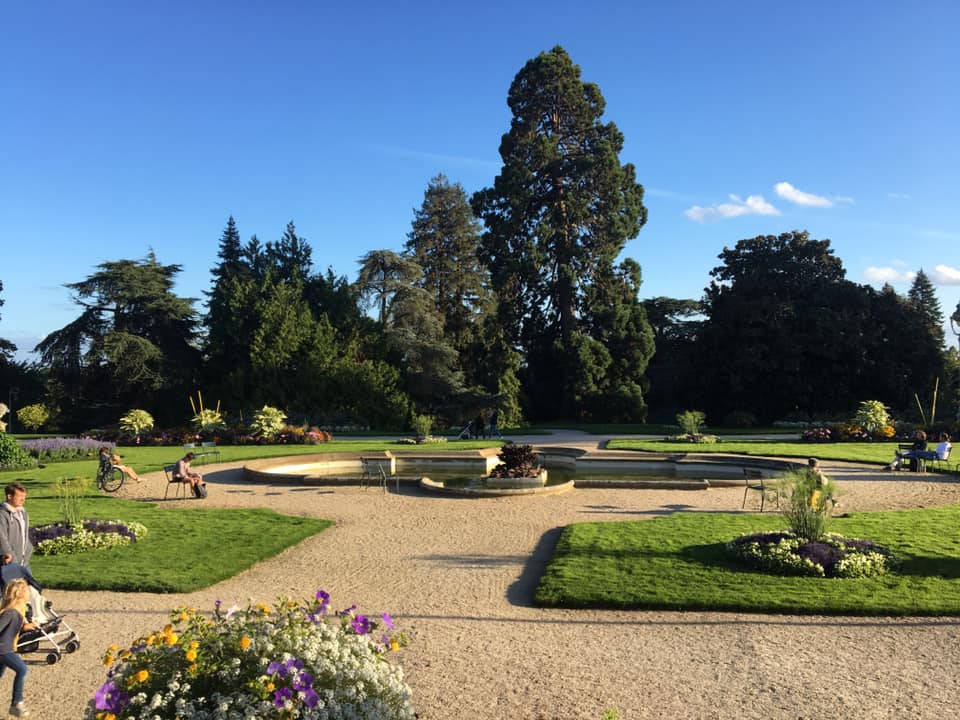
Once part of the Benedictine abbey of Saint-Melaine, the Thabor is one of the most beautiful city parks in France. Its roughly 10 hectares include a French-style garden, a botanical garden, a rose garden with hundreds of varieties, greenhouses, an aviary and a bandstand. It is a lovely place to relax between sights.
Les Champs Libres and the Musée de Bretagne
This striking modern cultural center, designed by Christian de Portzamparc and opened in 2006, brings together the city library, a science center with a planetarium and the Musée de Bretagne. The museum’s permanent exhibition traces the history of Brittany from prehistory to today, with costumes, objects and multimedia displays. Rennes also has a good Musée des Beaux-Arts.
Architecture from every era
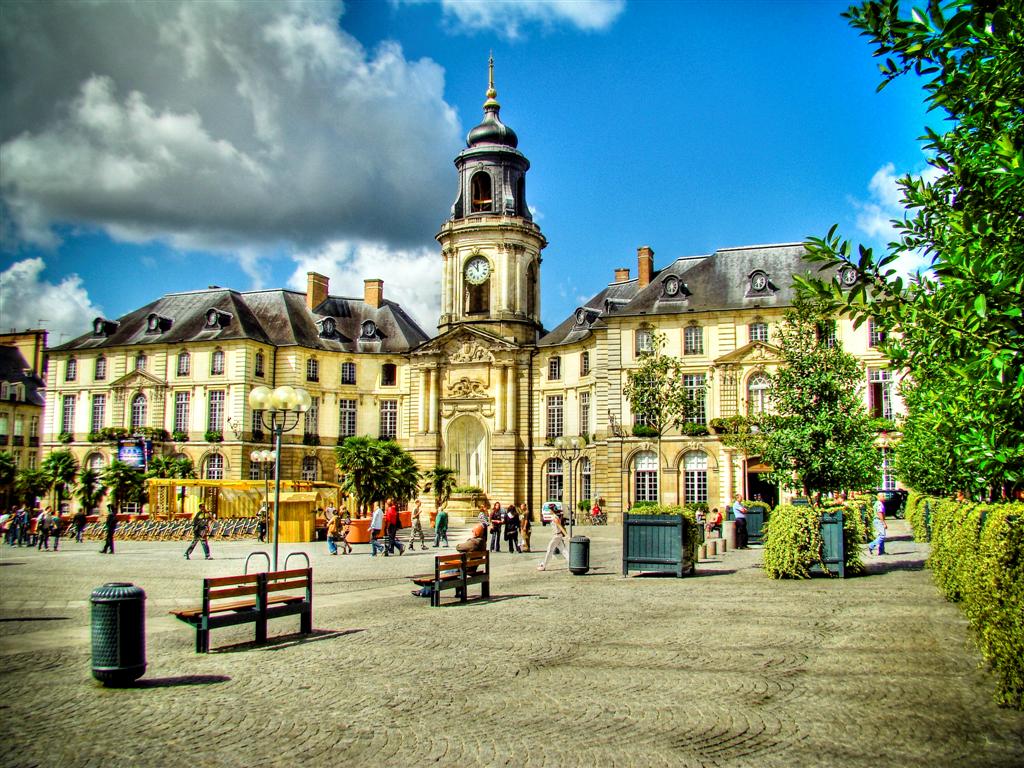
Beyond the half-timbered houses, Rennes mixes classical squares rebuilt after the 1720 fire, such as the Place de la Mairie with its Hôtel de Ville and opera house, Gothic and neoclassical churches including the Cathédrale Saint-Pierre, Art Deco buildings and bold contemporary architecture. Street art is everywhere too, particularly in the old town and along the canal.
Cycling along the Vilaine and the canal
The towpaths along the Vilaine and the Canal d’Ille-et-Rance are flat and green, ideal for an easy ride out of the center. The city’s bike-share system, Vélo Star, is a cheap way to explore.
A lively student city
With some 70,000 students, Rennes is one of France’s youngest cities. Bars around Rue Saint-Michel, nicknamed “Rue de la Soif” (Thirst Street), and Place Sainte-Anne are busy most evenings. Music fans should look out for the Rencontres Trans Musicales in December, a festival known for launching new artists, and the arts festival Les Tombées de la Nuit in summer.
More to discover
- Écomusée du Pays de Rennes: a farm museum at La Bintinais on the southern edge of the city, showing rural life and traditional breeds over five centuries.
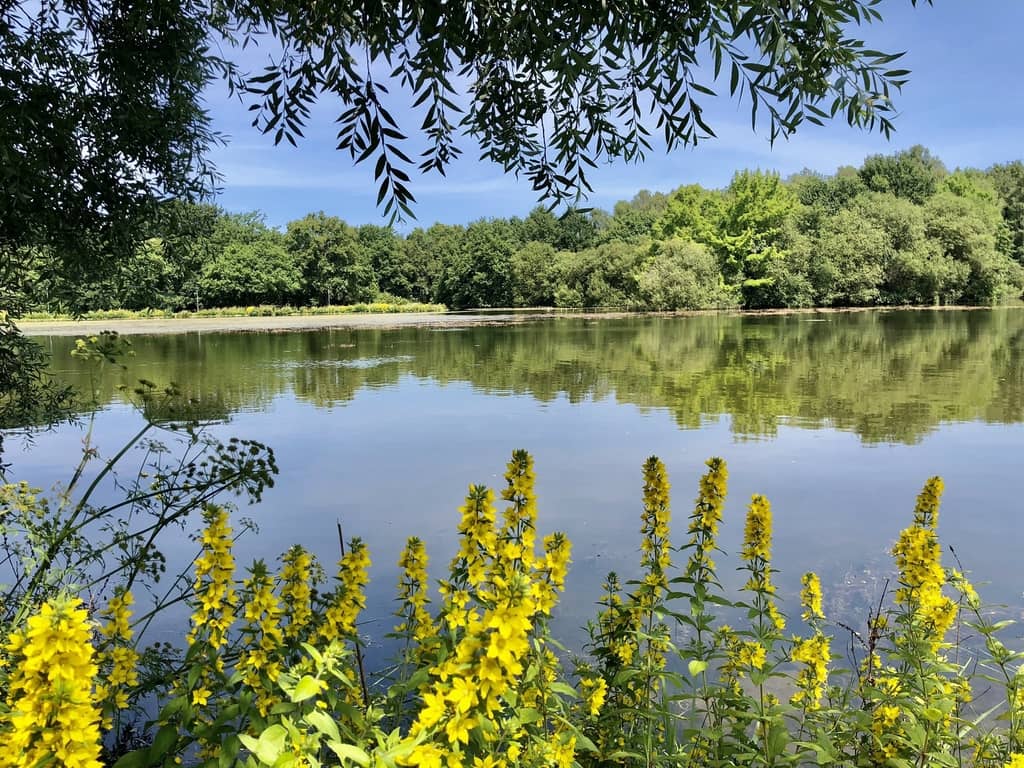
- Parc des Gayeulles: a 100-hectare park with lakes, sports fields, a small farm and an ice rink, popular with families.
- Chapelle Saint-Yves: a late-medieval chapel in the old town that long housed the tourist office. The main tourist office is now in the former Jacobins convent on Place Sainte-Anne.
Downsides to Consider
- No beach. Rennes is inland; the nearest coast is around Saint-Malo, about an hour away.
- Fewer headline sights. Its pleasures are atmospheric rather than monumental, so some visitors find one day enough.
- Rain. Showers are common in every season; pack a light waterproof.
- Student noise. If you are a light sleeper, avoid staying right next to Rue Saint-Michel or Place Sainte-Anne.
Who Will Enjoy Rennes Most?
- Food lovers, especially if you can be there on a Saturday morning.
- Travelers who like real, lived-in cities rather than museum towns.
- Young travelers and students looking for affordable nightlife.
- Anyone touring Brittany or Normandy by train, since Rennes is the region’s main rail hub.
How Long to Stay and Day Trips
One day covers the old town, the Parliament (if you book a tour), the Thabor and a crêperie. Two days let you add Les Champs Libres, the canal and the market. Rennes is also a practical base for day trips:
- Saint-Malo, the walled corsair city, about an hour by train; see Is Saint-Malo Worth Visiting?
- Mont-Saint-Michel, about an hour by car or by direct bus.
- Dinan, a beautiful medieval town on the Rance.
- The Brocéliande forest around Paimpont, linked with Arthurian legend.
Before you go, read Is Rennes Safe? and what Rennes is known for, and see our Brittany travel guide to plan the rest of your trip.
Summary
Rennes is worth visiting for its colorful half-timbered old town, the Parliament of Brittany, the Saturday Marché des Lices, the Thabor gardens and a lively food and student scene. It lacks a beach and big-name monuments, but it makes a relaxed, authentic one- or two-day stop and an excellent base for Saint-Malo and Mont-Saint-Michel.
